This post may contain affiliate links. If you make a purchase through these links, I may earn a commission at no additional cost to you. Learn more about our affiliate policy.
Put two flannels side by side, in your hands or in two browser tabs, and the difference is obvious in about four seconds.
One has a soft collar, a side seam sewn with a single line of stitching, and a tag that has gone illegible from washing. The other is stiff, heavy in a synthetic way, and the plaid sits on top of the fabric instead of woven into it.
Only one of them was there in 1994. The other is a costume version of it, and they cost about the same. Guess which one we’re bringing home.
Here’s how to tell, where the real ones hide, and four outfits people really wore.
What Makes Grunge Style Read as Real
Grunge was secondhand clothing before it was an aesthetic. Seattle bands wore flannel, worn denim, and heavy boots because it was cheap, warm, and available in a wet climate, and the look only became a look after the rest of the country noticed.
Which makes the grunge aesthetic the one where buying it new misses the point most. The clothes were supposed to be somebody else’s first, and I love that about it.
Three rules govern everything.
- Nothing should fit, because the entire silhouette was built on de-emphasizing the body. Oversized, borrowed, and slightly wrong is correct.
- The wear has to be real, so true fading and honest holes over factory distressing. A pre-ripped knee tends to look like a costume from across a room.
- The layering is unplanned, meaning a slip dress over a thermal, a tee under a flannel, a cardigan over all of it, and none of it coordinated on purpose.
The Era Tells That Date a Part
The tell: turn the garment inside out first, or go straight to the tag and hem photos. Nineties clothing is well documented and easy to place once you know the four things to look at.
- Single stitch hems on tees and shirts generally mean pre-mid-nineties production. Look at the sleeve hem for one line of stitching where newer tees have two parallel lines. It takes two seconds, and good listings photograph it.
- Made in USA on the tag was still common through the early nineties and largely gone by the end of the decade, so it is a fast era check on tees, flannels, and denim.
- Zipper brands narrow the window. A Talon or Conmar metal zipper points to older American production, while YKK became standard in the American market from roughly 1970 onward.
- Fiber content on dresses matters more than anything else on a floral. The nineties version is rayon or rayon challis, which drapes limply and wrinkles constantly. A stiff polyester floral in the same print is usually newer, and it won’t hang the same way.
The soft collar is its own tell. Flannel and oxford collars go truly soft after a decade of washing in a way no factory finish reproduces, and that softness is worth more than the plaid pattern.
The Core Pieces Worth Hunting
Six pieces cover the whole aesthetic.
- An oversized flannel in a muted plaid, sized to hang off the shoulder or tie at the waist.
- A rayon floral dress in a small ditsy print, babydoll or midi, ideally slightly limp.
- A faded band tee, oversized, with cracked screen printing rather than crisp printing.
- Blown out Levi’s with real holes at the knee and a hem that has frayed on its own.
- A chunky knit cardigan, grandpa style, worn open over everything.
- Combat boots or Doc Martens, already scuffed. Brand new ones take a while to look right.
Where 90s Grunge Hides in a Thrift Store
Almost none of it is in womenswear, which is the good news.
- Men’s flannels cover every oversized plaid worth owning, priced lower than the women’s versions.
- Tees are where band shirts hide, usually mixed in with everything else. Check the sleeve hem before the graphic.
- Rayon floral dresses sit unwanted because they look dated on a hanger and completely different on a body.
- Small town stores and sellers consistently beat big city ones, since nineties pieces in cities have been picked over for a decade. Online, that means looking past the curated vintage shops to ordinary closet cleanouts.
Checking condition is fast here.
- Good signs. Fade, fray, thinning at the elbows, and cracked screen print are all what you want.
- Put it back. Underarm rot, a shredded collar, and a torn-out back yoke are the three real dealbreakers.
Four Grunge Outfit Formulas From 1994
These four are the ones people were really wearing, before the runways got involved.
The Flannel Over the Floral Dress
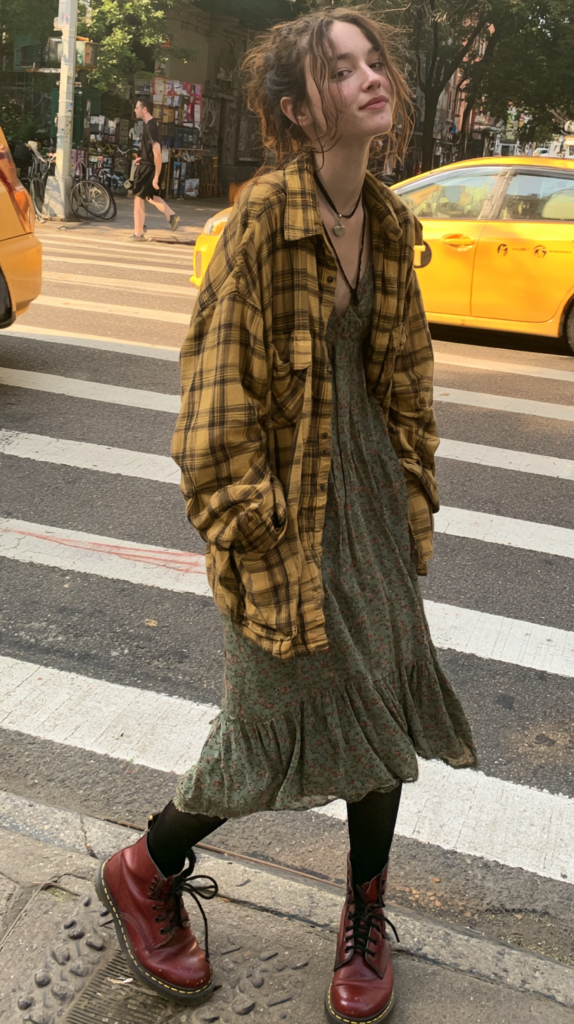
The single most documented grunge outfit of the era, and still the fastest one to build.
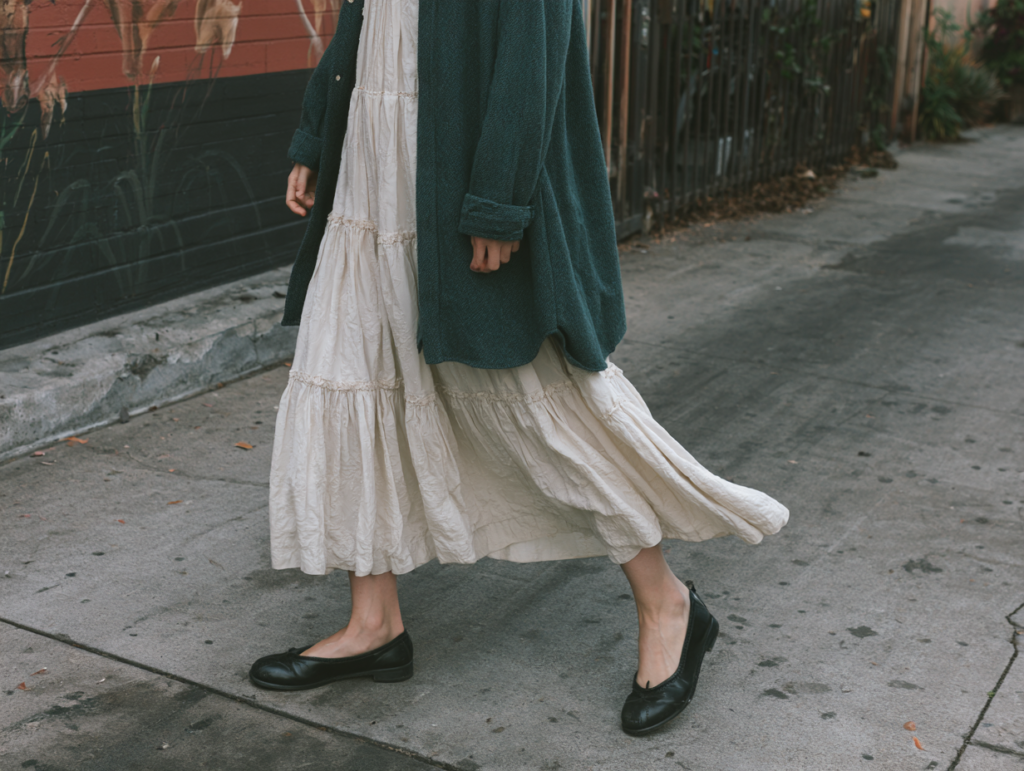
An oversized flannel worn open over a rayon floral babydoll or midi dress, opaque black tights underneath, scuffed Doc Martens below.
The flannel should be at least two sizes too big and never buttoned. Tied at the waist is the other correct option, and the only styling decision in the outfit.
The tell: the dress underneath is where this usually goes sideways. Look for a small ditsy print over a large bold floral, rayon on the tag, and a hem that lands somewhere a little awkward between the knee and the ankle.
Shop the Look
From the Avant Heir Closet
One of One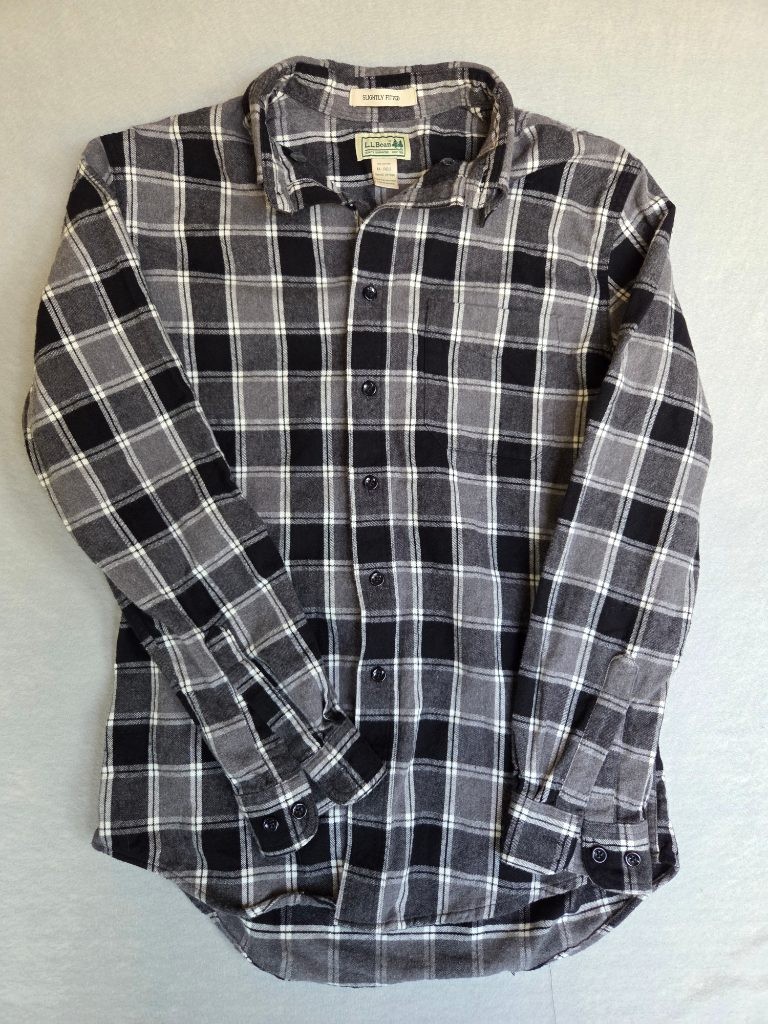
The Band Tee and Blown Out Levi’s
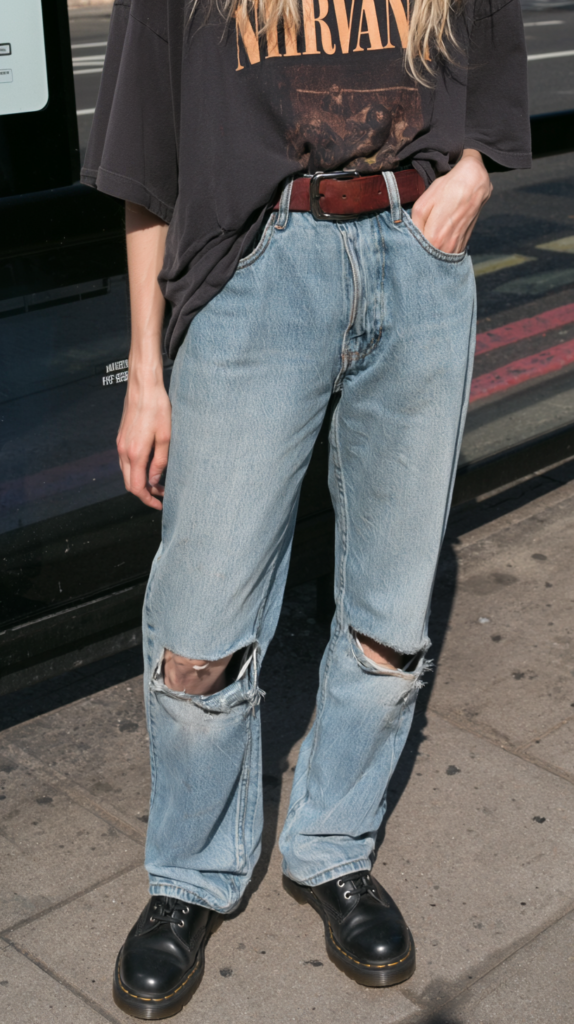
The core uniform, and the formula where the era tells matter most.
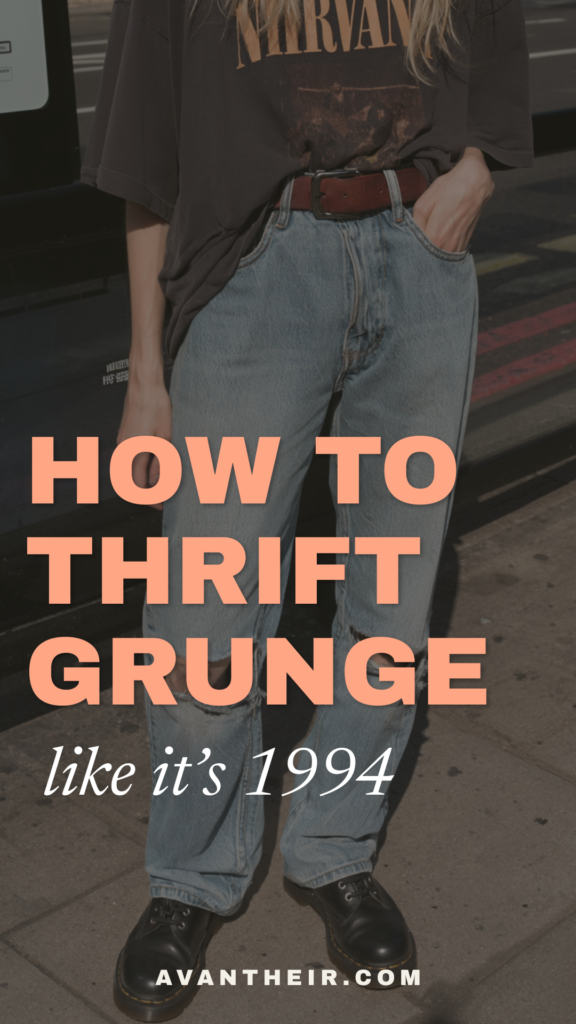
A faded band tee two sizes up, tucked loosely at the front only, with distressed Levi’s and a worn brown leather belt.
The tell: check the screen print for cracking, which happens over decades and is hard to fake convincingly. A perfectly crisp graphic on a supposedly vintage tee is usually a modern reprint, which is fine to wear but shouldn’t cost vintage money.
On the denim, honest holes show up at the knee and the back pocket corners, since that’s where real wear happens. Factory distressing tends to show up on the thigh, where a real hole almost never forms.
Shop the Look
The Striped Long Sleeve Under a Tee
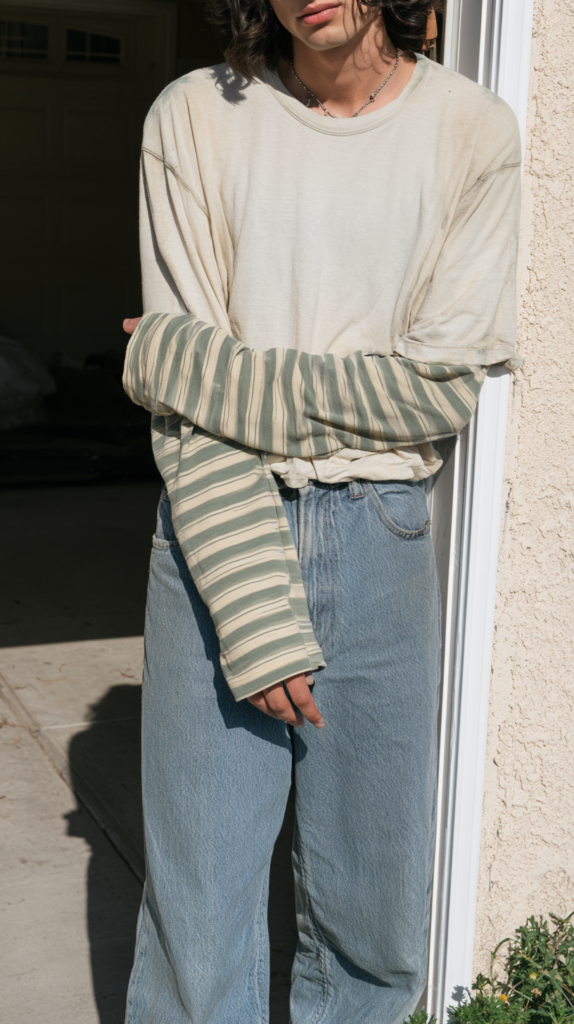
The most specific formula on this list and the one that instantly places you in the right year.
A striped long sleeve worn under a short sleeve graphic tee, baggy carpenter jeans below, canvas skate sneakers.
The stripes should be muted and horizontal. Think sage, rust, mustard, forest, or cream. Bright primary stripes push the outfit toward a different decade entirely.
The tell: striped long sleeves usually get sorted with men’s tees and cost almost nothing, because nobody recognizes them as anything. Search “striped long sleeve tee” in men’s and look for 100% cotton.
Shop the Look
The Cardigan Over a Baby Tee
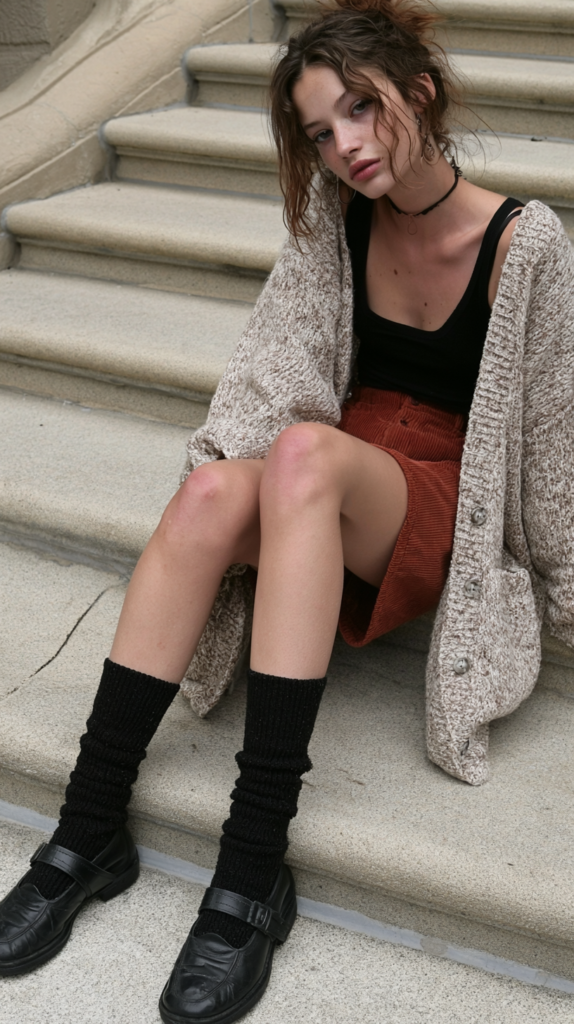
The version that works in cold weather, and the one that reads softest without losing the era.
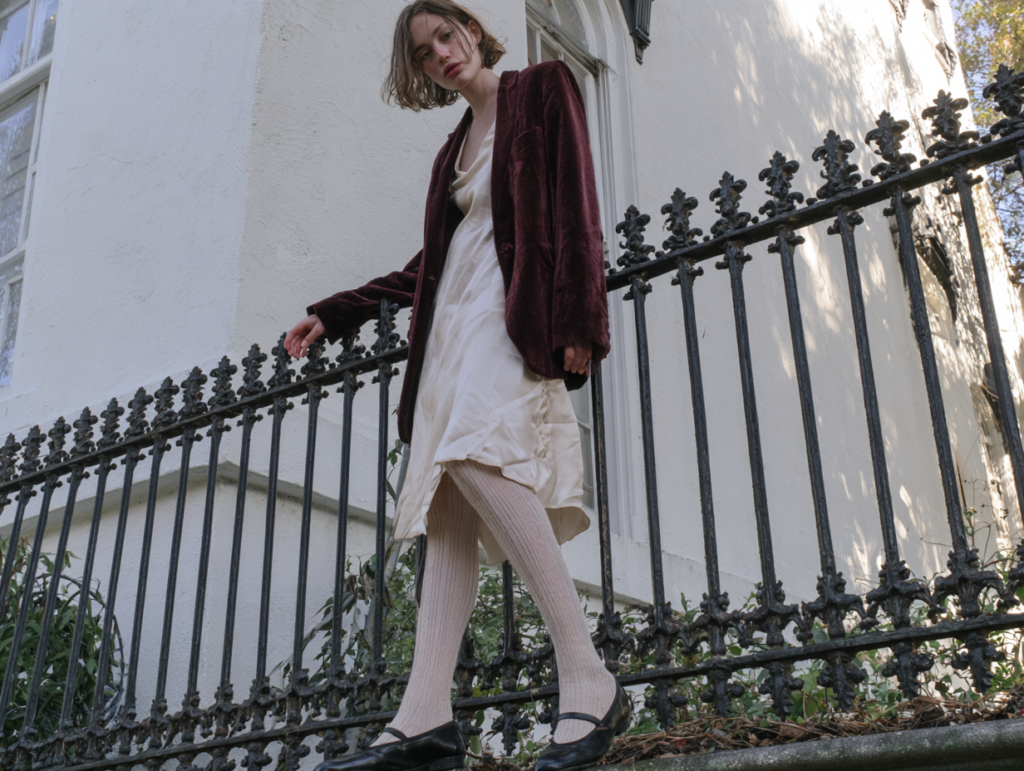
An oversized grandpa cardigan over a fitted baby tee or tank, corduroy mini skirt, ribbed knee high socks into mary janes.
The proportion contrast is the entire outfit. A slouchy cardigan over something fitted is what keeps this from just looking oversized.
The tell: real wool cardigans from this era have leather or shell buttons and a heavier feel than acrylic, and both show in photos. Check the elbows for thinning, which is common and usually the reason the cardigan got let go.
Shop the Look
The Short Version
Grunge is the one aesthetic that rewards buying used more than any other, because the clothes were secondhand by definition and the wear is the finish.
Check the sleeve hem for single stitching, read the fiber tag on every floral, and go by the collar before the plaid. Start in menswear, then move on to the rayon dresses.
Start with the flannel. It’s the cheapest of the six pieces, it turns up absolutely everywhere, and it converts almost anything already in your closet into the right decade the moment you leave it unbuttoned.