This post may contain affiliate links. If you make a purchase through these links, I may earn a commission at no additional cost to you. Learn more about our affiliate policy.
Boho is the aesthetic everyone quietly abandons in November.
The maxi skirts go to the back of the closet, the fringe comes off the hook, and what replaces them is a puffer and a beanie like everyone else. I’ve done it too.
Which is a shame, because texture is the entire language of this aesthetic, and winter is the only season that lets you speak all of it at once.
Here are eight outfits built from layers other people gave away. (The cheapest one is a bathrobe. Number seven. You’ll see.)
What Makes Dark Boho Winter Outfits Work
Boho winter outfits fall flat when they just get cold, and they sing when they get heavy. The pieces you want add warmth and texture in the same move.
The dark version of boho pulls the palette down into oxblood, tobacco, moss, char, and rust, where the summer version lives in cream and turquoise. Same aesthetic, with the sun taken out.
Three rules hold the whole thing together in cold weather.
- One hero, everything else supporting, so if the coat is embroidered or heavily fringed, the skirt underneath goes quiet. Two statement pieces in one outfit is where boho tips into costume.
- Build from a slim base, meaning a fitted thermal, a merino turtleneck, or a long sleeve jersey under everything. Warmth without bulk is what makes the layers on top read as intentional.
- Texture beats print in winter, since suede, shearling, crochet, corduroy, and heavy knit do more in low light than another pattern will.
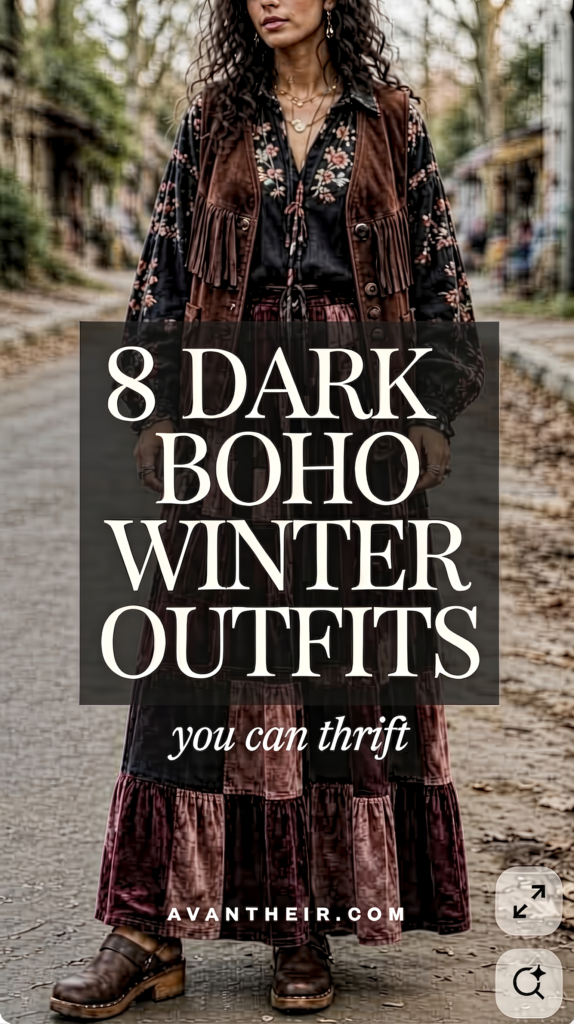
Eight Dark Boho Winter Outfits
Each one is built around a single heavy layer with a quiet base underneath.
1. The Afghan Coat Over a Knit Maxi
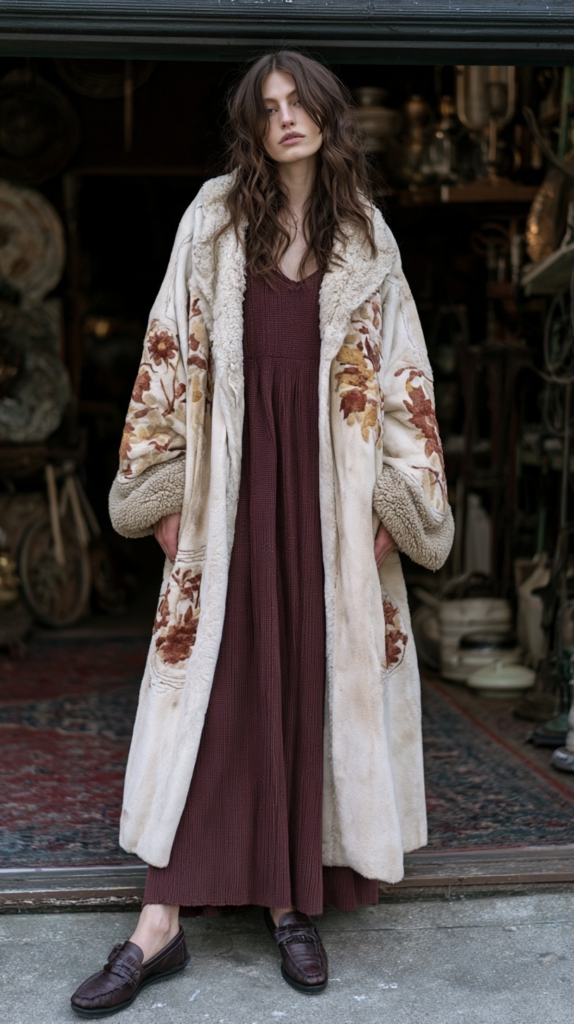
The hero piece of the entire aesthetic, and the one worth being patient about.
An embroidered shearling Afghan coat over a ribbed knit maxi dress in chocolate or oxblood, with tall suede boots.
Real Afghan coats are sheepskin with the wool turned inward and hand embroidery on the outside. The wool at the cuffs and collar goes matted before anything else fails, and matted is fine.
The tell: faux versions are printed where real ones are stitched. Look at the back of an embroidered panel, or ask for a photo of it. Real embroidery shows thread on the reverse, and a print shows nothing.
Shop the Look
2. The Suede Fringe Jacket and Bell Bottoms
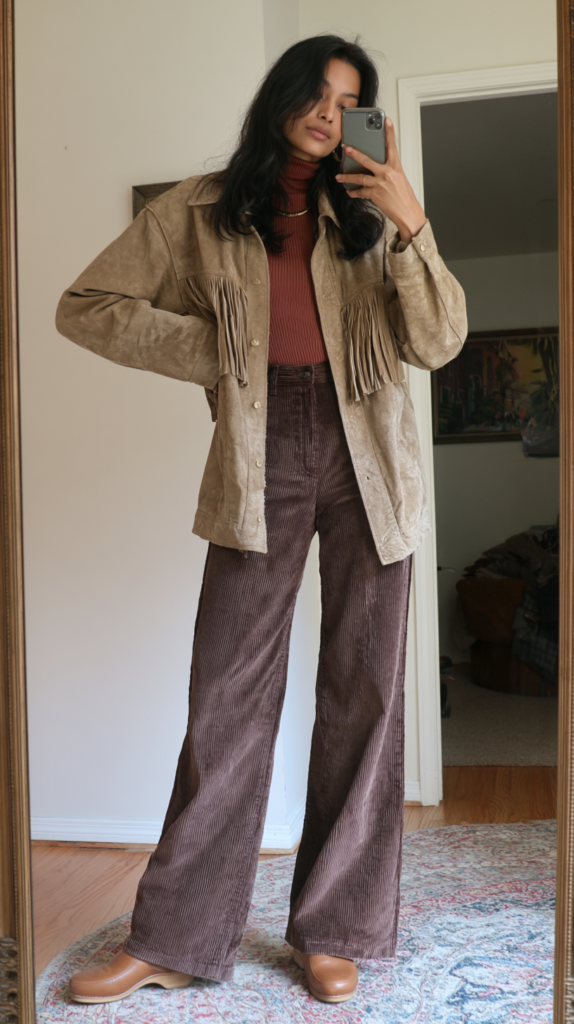
The seventies formula, and the one that reads most immediately as boho from across a street.
A brown suede fringe jacket over a rust ribbed turtleneck with corduroy bell bottoms.
Fringe placement is what separates elevated from theatrical. Shorter fringe at a yoke or a hem gives movement, while long dense fringe across the whole body adds width and starts to feel like a costume.
The tell: real suede has a nap that changes direction when you brush it, and a soft, slightly uneven surface. You can see that unevenness in photos as lighter and darker patches. Bonded or corrected suede looks uniform, feels faintly plastic, and won’t take conditioner.
Shop the Look
3. The Blanket Poncho and Wide Leg Cords
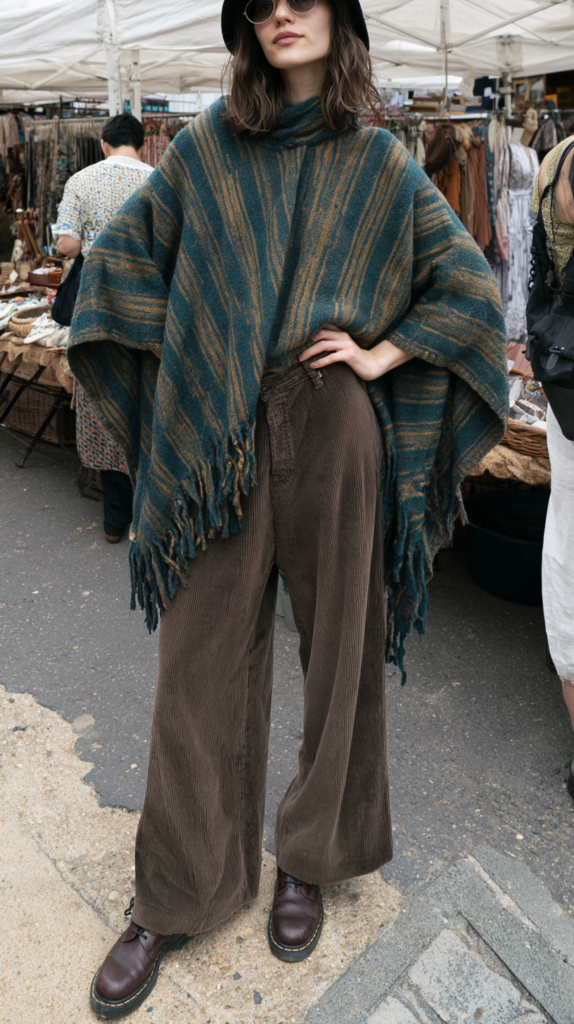
The warmest outfit here for the least money, since ponchos are almost never priced as outerwear.
A fringed wool blanket poncho over a slim base layer, with wide leg brown corduroy trousers and heeled leather ankle boots.
The heel matters here. A poncho adds volume at the top, and a flat boot lets the whole silhouette collapse downward.
The tell: check the fiber tag before you trust the look. A real wool poncho is warm enough to replace a coat. Acrylic is lighter and much less warm, so it’s a fine layer for a few dollars, just not your outerwear.
Shop the Look
4. The Long Knit Vest Over a Printed Maxi
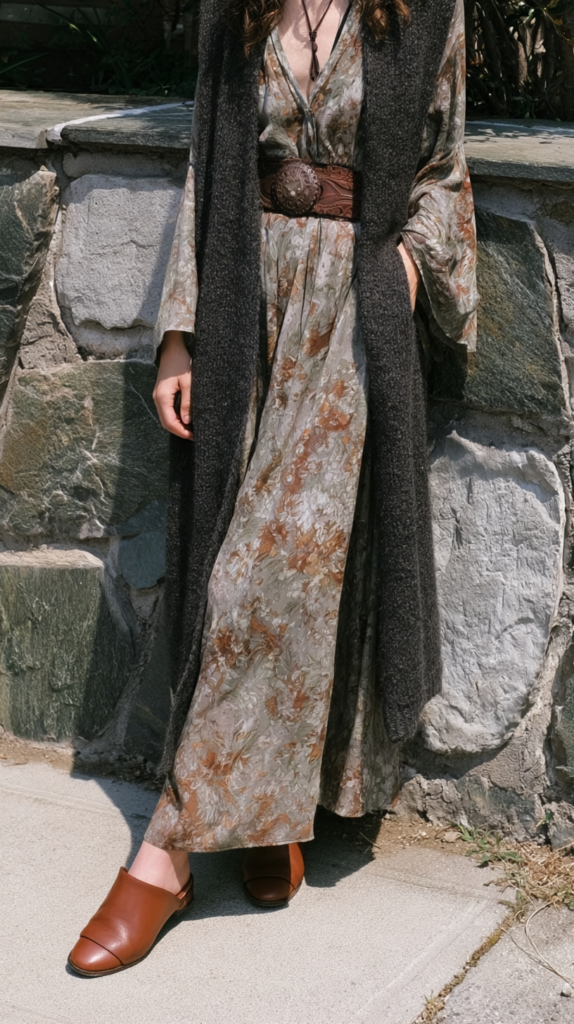
The formula that takes a summer dress you already own straight into January.
A long sleeveless knit vest worn open over a printed rayon maxi, belted at the waist with a wide concho belt.
A vest keeps the sleeve of the dress visible where a cardigan would cover it, and that’s the detail that stops this from looking like a dress with a sweater thrown over it.
The belt does the rest. Without one, the vest and the dress hang as two separate columns. With one, they become a single layered outfit.
Shop the Look
5. The Crochet Layer Over a Turtleneck
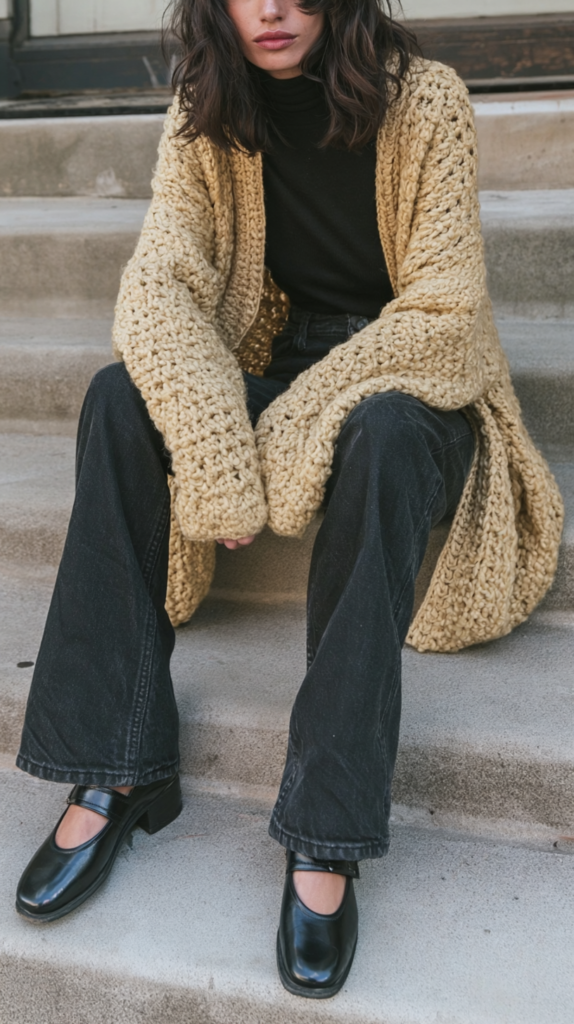
The one that solves crochet, which most people only wear in July.
An oversized crochet cardigan in cream or oatmeal over a fitted black merino turtleneck, with dark wash flared jeans.
Crochet over a solid dark base is the trick. The moment a contrasting layer shows through the openwork, it stops looking like a summer piece and starts looking like texture.
The tell: handmade crochet is worth more than machine knit here, and you can tell by the joins. Hand work shows slight irregularity where panels meet, while machine pieces are perfectly even. A close-up photo shows it right away.
Shop the Look
6. The Fur Collar Coat and a Paisley Scarf
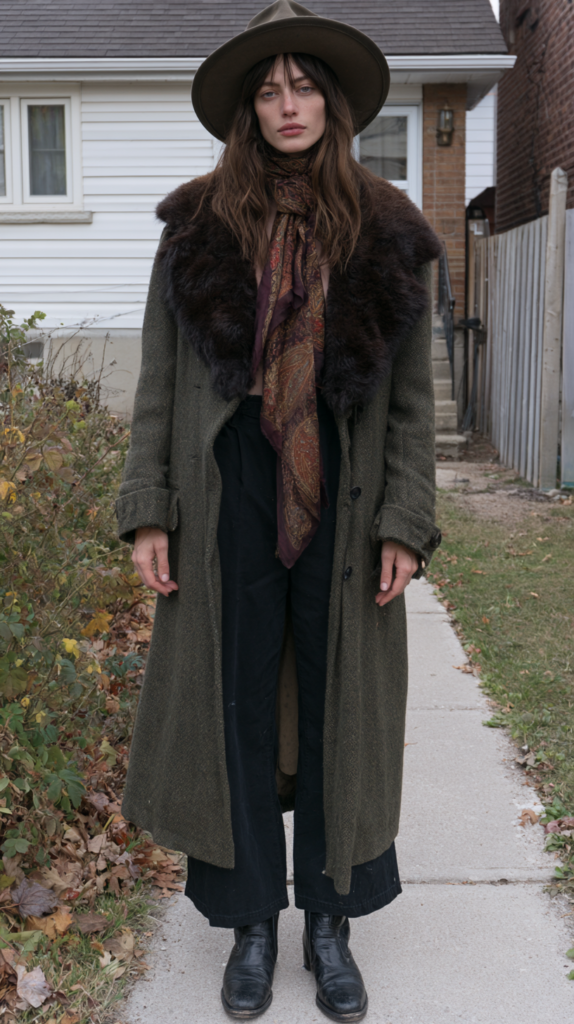
The most polished of the eight, and the one that works somewhere you have to look put together.
A wool coat with a fur collar over black wide leg trousers, with a long paisley silk scarf wound twice and left long.
Sixties and seventies coats with detachable collars turn up constantly and get passed over because the collar looks dated on a hanger. On a body, with a scarf, it’s a completely different coat.
The tell: silk scarves are some of the cheapest accessories you can buy secondhand, and the fastest way to add pattern without committing a whole garment to it. Look for a hand rolled edge, which shows as a plump little roll with tiny stitches, and “100% silk” on the tag.
Shop the Look
7. The Kimono Duster Over Black Layers
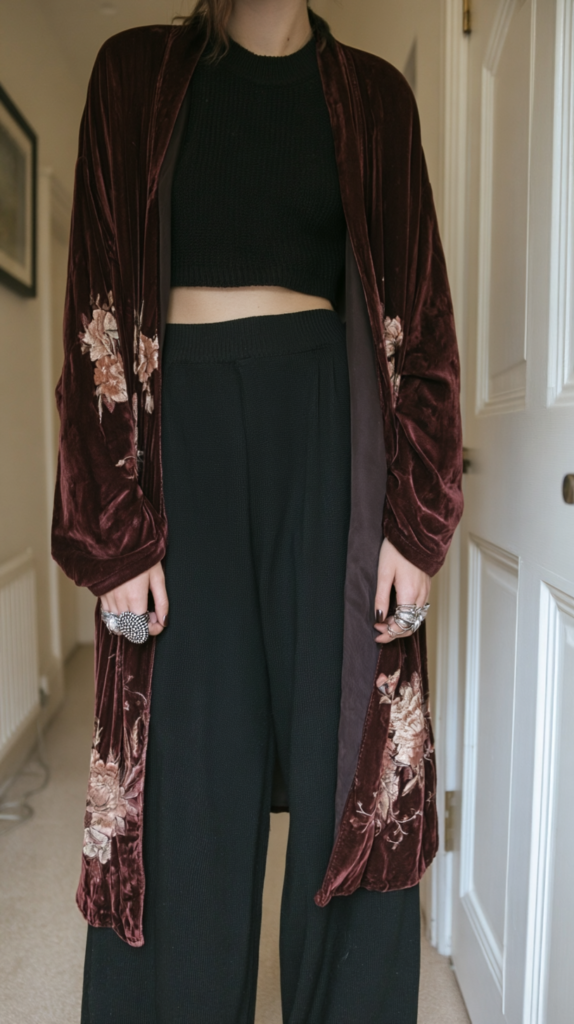
The evening version, and the cheapest way into the aesthetic if you own nothing else.
A velvet or embroidered kimono duster worn open over a black ribbed knit top and matching bottom, with pointed black ankle boots.
The tell: robes and kimonos get sorted as sleepwear and cost almost nothing, which is the whole opportunity. Check the shoulder seams and the sleeve joins, since silk gives out there first, and ask for a photo of both if the listing skips them.
Keeping the base monochrome is what turns a robe into a duster. Otherwise it’s sleepwear you forgot to take off.
Shop the Look
8. The Shearling Vest and a Patchwork Skirt
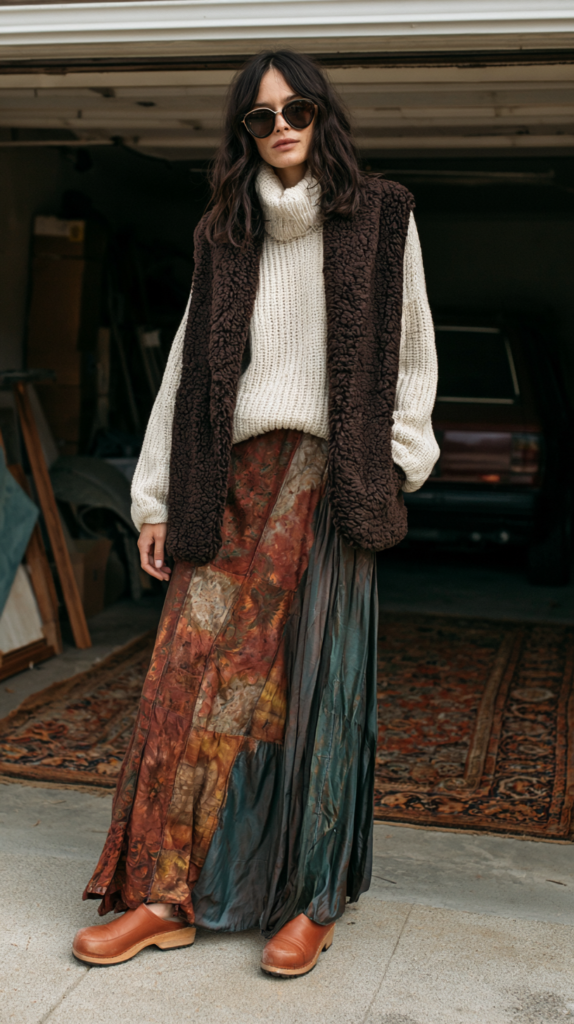
The most texture packed of the eight, and the one that proves the aesthetic can go maximal without going costume.
A shearling vest over an oversized cream turtleneck, with a patchwork or pieced maxi skirt and tall boots.
The skirt is the hero, so the vest and knit stay entirely plain. Flip that and the outfit stops working.
The tell: pieced and patchwork skirts are often handmade, which means sizing runs unpredictably and most have no tag at all. Go by the flat waist measurement every time.
Shop the Look
Where the Layers Hide
Almost none of the heavy pieces here are sorted where you’d expect, in a store or in search results.
- Sleepwear and robes holds kimonos, velvet dusters, and embroidered wraps, priced as loungewear when they work as outerwear.
- Men’s coats hold the fur collar coats and most of the shearling, and the boxy fit is right for this aesthetic anyway.
- Blankets and linens are worth a look for wool blankets that become ponchos and throws that become scarves.
- Rayon maxi dresses are around all year, and they’re cheapest in December when nobody is thinking about them.
The tell: suede and shearling are the two materials to check carefully. Dryness and surface scuffing come back with conditioner and a suede brush. Cracking through the grain and stiff, board-like leather don’t.
The Short Version
Winter is the best season for this aesthetic, because suede, shearling, crochet, and heavy knit are what boho was always made of.
Start slim underneath, pick one hero layer, and let everything else stay quiet around it. That single rule is what separates a layered outfit from a pile of pieces.
Start with the poncho. It’s one of the cheapest heavy layers you’ll find, it goes over things you already own, and it will teach you how much volume this aesthetic can carry before it tips.