This post may contain affiliate links. If you make a purchase through these links, I may earn a commission at no additional cost to you. Learn more about our affiliate policy.
The whimsigoth dress you’re looking for was made between 1993 and 1998, cost forty dollars at a mall store, and has been waiting for you since roughly 2004.
It’s on a wire hanger, or in a listing with four blurry photos. The rayon has gone limp in the good way. Nobody has looked at it twice, because at a glance it looks like a dated nightgown.
That’s the one. I get a little thrill every time.
Here’s how to recognize each version of it, what the fabric should feel like, what the tag should say, and what to pay.
What Actually Makes a Whimsigoth Dress
A whimsigoth dress is defined by fabric and print before it is defined by color. Velvet, rayon, mesh, and lace, in jewel tones gone slightly dusty rather than saturated.
The whimsigoth aesthetic pulls from a specific window of nineties mall fashion, which is exactly why it’s so findable secondhand. That decade produced enormous quantities of celestial prints, velvet, and sheer overlays, and a lot of it is still sitting around because it looks like nothing special on a hanger.
Three things separate the real ones from the reproductions.
- The fabric has to move, so rayon, panne velvet, and mesh over anything stiff. Hold the skirt out and let it drop. If it swings and then settles, it’s right. If it holds a shape, it’s probably polyester. Online, the fiber tag answers the same question.
- The print should feel slightly cheap, since these were mall dresses and not couture. Small scale celestial motifs, muddy florals, and prints that sit slightly off register are all correct.
- The color is dusty rather than bright, meaning oxblood over red, forest over green, plum over purple, and ink over true black.
The Five Dresses Worth Hunting
Each of these is a different find, and each one turns up at a different rate.
The Panne Velvet Maxi
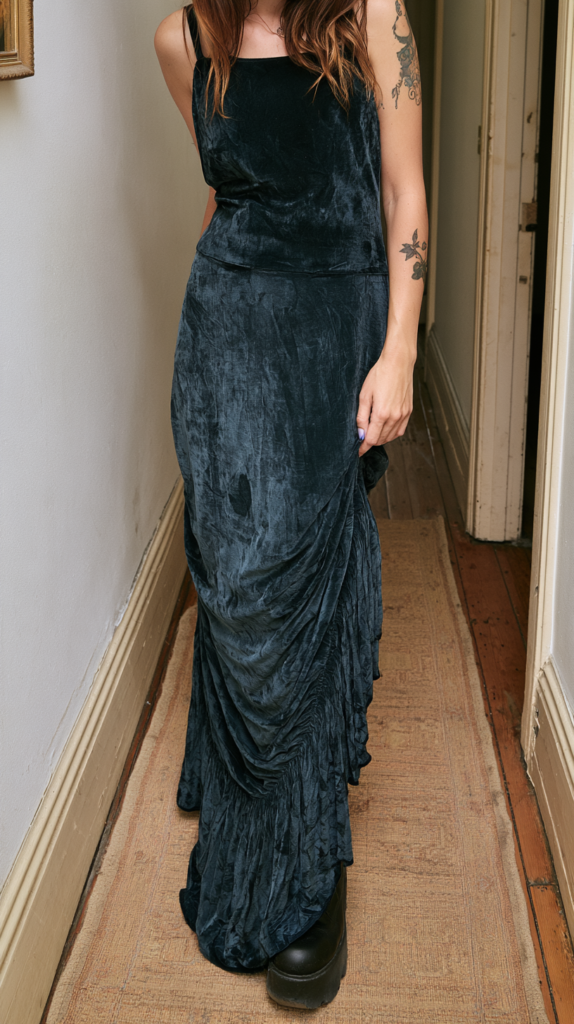
The most recognizable version, and the one I check for every single time I see velvet.
Panne velvet is crushed velvet that has been pressed flat in one direction, so it catches light unevenly and looks wet under low lighting.
The tell: run your hand against the nap. If the pile stays flattened where you pushed it, that’s panne. If it springs back evenly, it’s plush velvet, which is heavier and more formal than this aesthetic wants. In photos, panne has an uneven, almost liquid shine.
Shop the Look
From the Avant Heir Closet
One of One
The Celestial Print
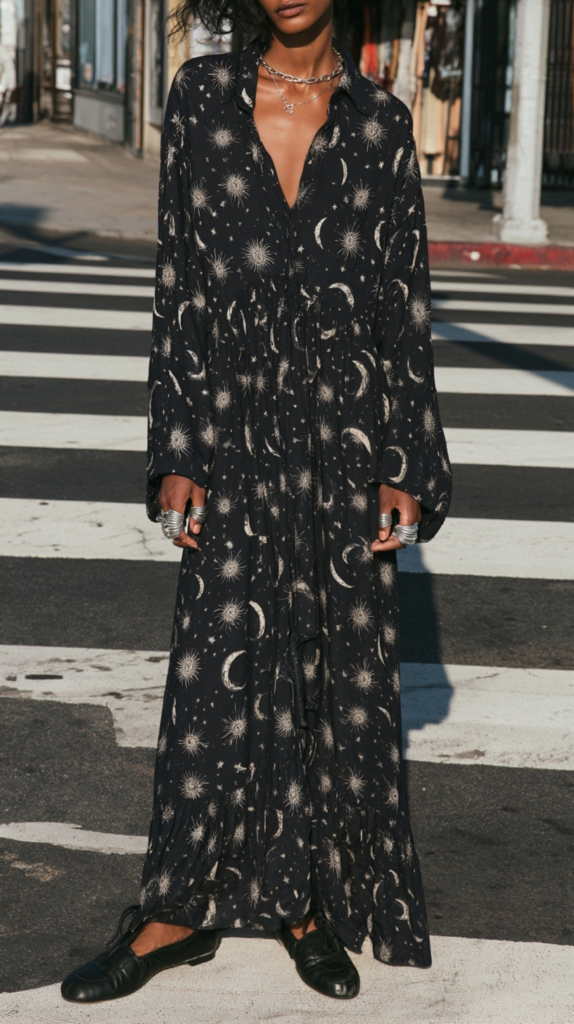
The rarest of the five, and the one people get most excited about.
Sun, moon, and star prints were everywhere in the mid nineties on rayon dresses, vests, and scarves, and they have become the shorthand for the entire aesthetic.
The tell: check the print scale. Small repeating motifs are period correct, while a large single moon across the chest is usually a modern piece made for this trend. Nothing wrong with modern, but it shouldn’t cost vintage money.
Shop the Look
The Mesh Overlay
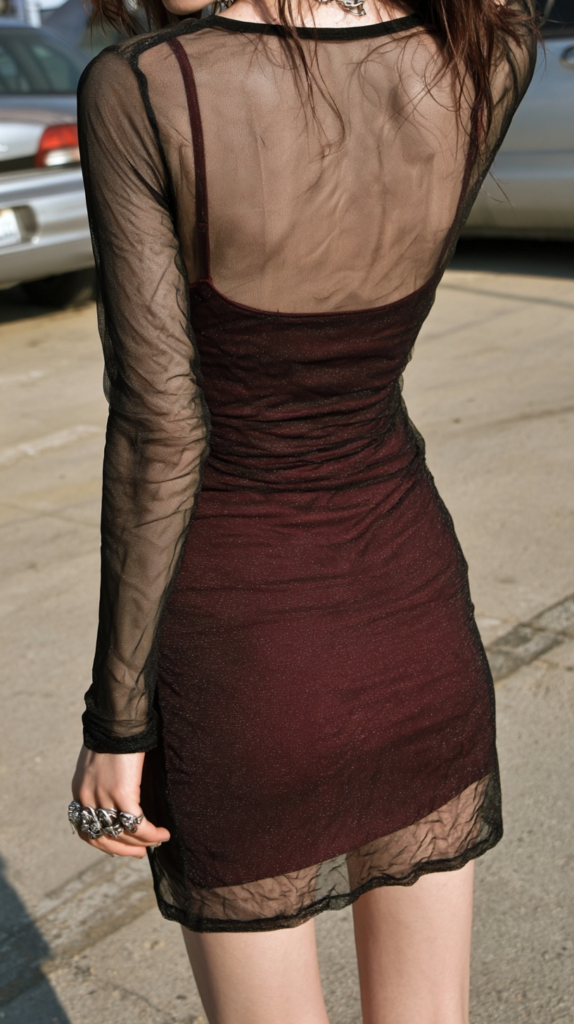
The cheapest of the five to find and the most versatile once you have it.
A sheer mesh overlay dress has a fitted slip underneath and a floating layer of mesh or chiffon over it, usually with long sleeves.
The tell: mesh snags and pills, which is why there are always plenty of these for almost nothing. A few snags are period correct and don’t change how it looks on. Zoom in on the sleeves and skip anything with a real tear.
Shop the Look
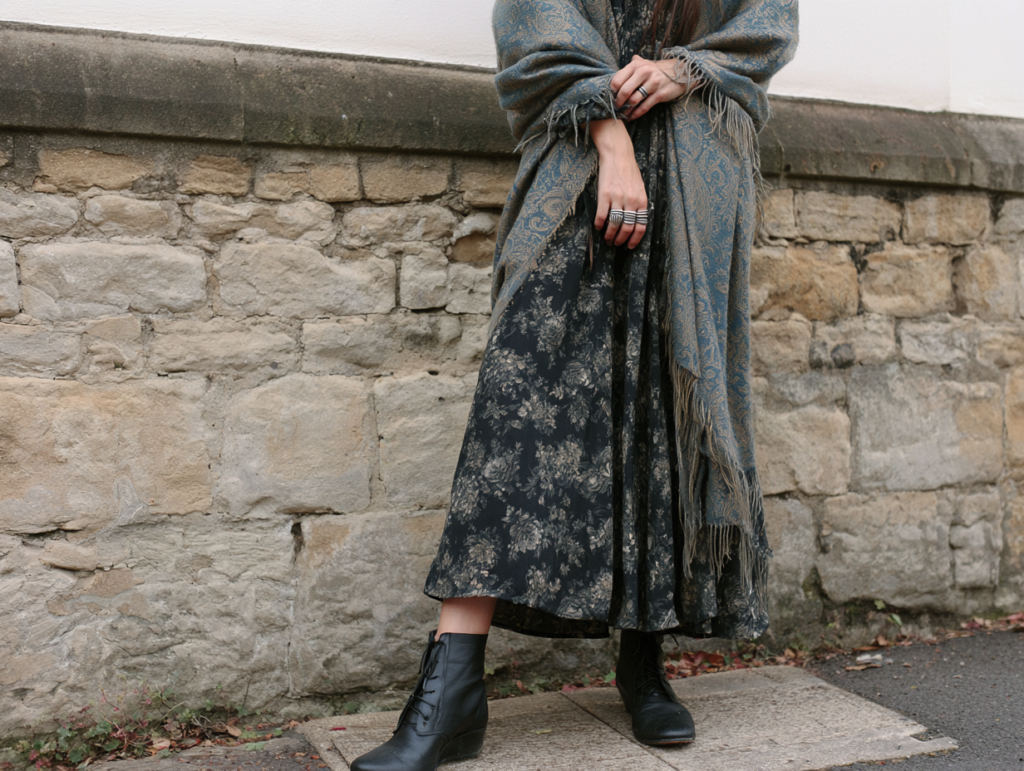
The Dark Floral With a Bishop Sleeve
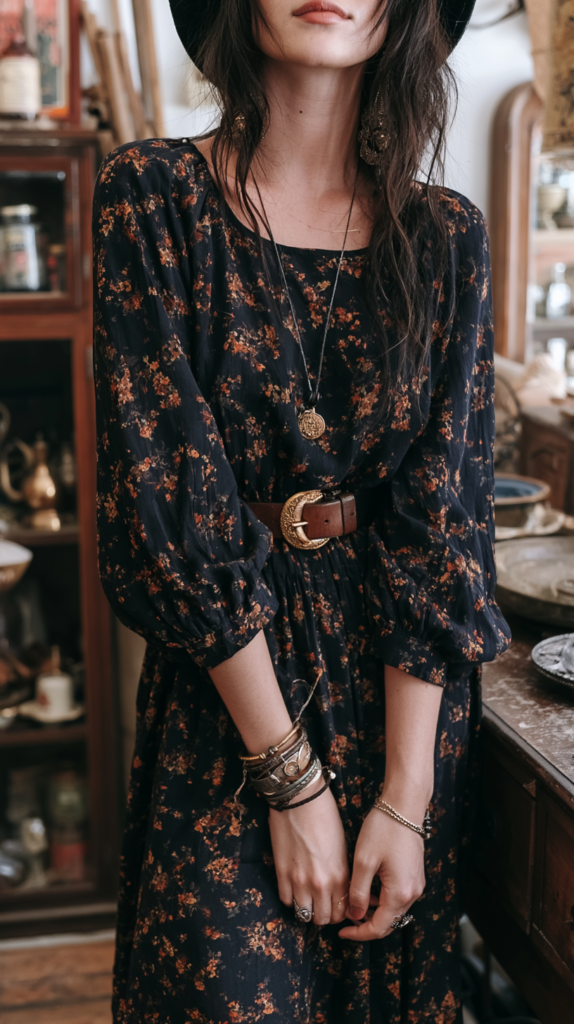
The most common of the five, and the one most people walk past.
A dark ground rayon floral with a full bishop or balloon sleeve, ideally with a small muddy print rather than a bright one.
The tell: the sleeve is what separates this from a grunge floral. A gathered cuff and a full sleeve feel witchy, while a plain short sleeve on the same print belongs to a different mood entirely. Search “bishop sleeve” or “balloon sleeve” along with the print.
Shop the Look
The Lace or Crochet Maxi
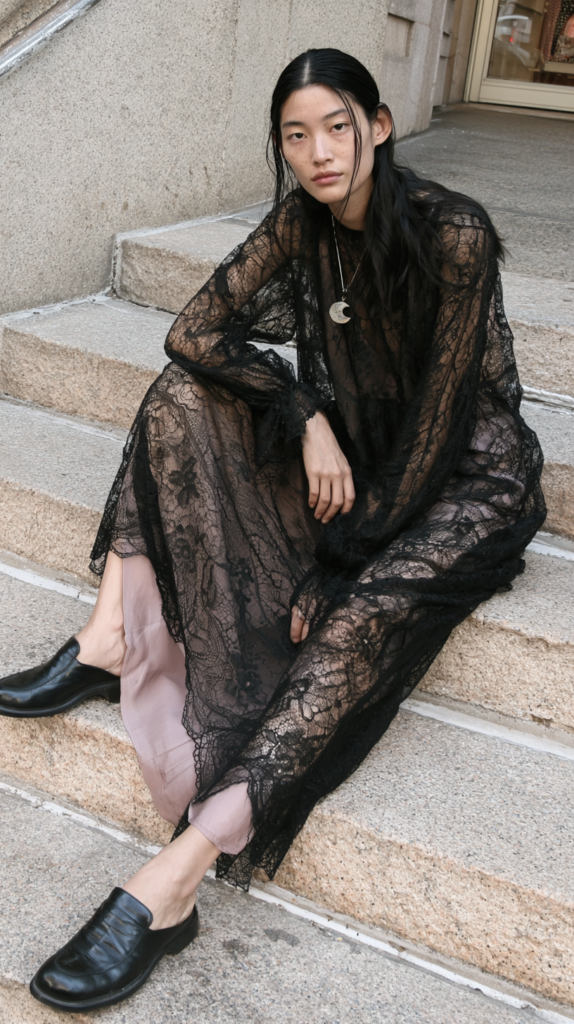
The hardest to find in wearable condition and the most striking when you do.
A black crochet or lace maxi with a slip underneath, or a lace overlay over a solid body.
The tell: check the underarms and the seat, which are where lace goes first. A hole in the skirt is fixable, and a torn underarm usually isn’t. Ask for photos of both if the listing skips them.
Shop the Look
The Era Tells
Turn it inside out before you decide, or go straight to the tag photos.
- Fiber content is the fastest check. Rayon, acetate, and rayon blends are period correct and drape the right way. Polyester in the same print can still be nineties, but it’s more often a newer piece, and it won’t move the same.
- Made in USA tags were still common on mall dresses through the mid nineties, which is a quick era anchor.
- A metal side or back zipper rather than a plastic one suggests older production, and a zipper that has gone slightly stiff usually just needs wax.
- Care labels gone illegible from washing are a good sign. It means the dress was worn and loved for years.
What to Pay
What you’ll pay depends on where you find it.
- In store these are almost always priced as ordinary dresses, since what makes them special is invisible on a hanger. This is where the best deals are.
- Online the same dress is often priced by someone who knows what it is, and celestial prints and true panne velvet cost the most. Listings that never mention whimsigoth are where the bargains hide, so search by fabric and print too.
- Condition adjusts everything. Snags on mesh and a soft nap on velvet are fine. Underarm staining, a broken zipper on a fitted bodice, and holes at the seat are the three things that should lower the price or send it back.
The one exception I’d overpay for is a celestial print in good condition, because those don’t come around often, and they’re the piece the whole aesthetic is recognized by.
Where They Hide
Nearly all of these get sorted by color or occasion, never by decade, so you have to know where to look.
- Long dresses and formal wear hold most of the velvet, because it gets sorted as eveningwear.
- Clearance and low priced listings are worth a full pass, since rayon that has gone limp gets marked down for looking tired, and limp is exactly what you want.
- Estate sales are the best source for a full set, because a woman who bought one celestial print dress in 1995 almost certainly bought three.
- Off season is a good time to look. Long sleeve velvet gets cleared out in spring and sits untouched until fall.
How to Style the One You Find
The dress does all the work, so everything else stays quiet and slightly heavy.
Silver rather than gold, stacked and mismatched. A moon or star pendant sitting at the sternum, a pointed ankle boot, and a velvet duster or an oversized cardigan thrown over when it turns cold.
The one styling rule worth keeping: the dress should look like you’ve owned it for years, not like you assembled a look around it this morning.
Shop the Look
The Short Version
The dress is out there in quantity, and it’s cheap because it looks like nothing on a hanger and most people browsing don’t know what they’re looking at. You do now.
Go by fabric before print, check that the skirt swings and settles, and read the fiber tag on anything that looks close. For the rest of the wardrobe around it, the broader whimsigoth thrifting guide covers what to layer over it.
Start with the mesh overlay. It’s the cheapest and most common of the five, it turns up almost everywhere, and it will teach you the fabric feel you need to spot the other four from across a room.