This post may contain affiliate links. If you make a purchase through these links, I may earn a commission at no additional cost to you. Learn more about our affiliate policy.
Every good vintage shop has a corner nobody else stops at, and every search has a page nobody scrolls to. Boxy linen shirts three sizes too big, a tunic with pockets deep enough to lose your keys in, a wrap that could be a coat or a blanket depending on the day. That corner is where you learn lagenlook, and it’s one of my favorite places to be.
What Lagenlook Style Actually Means
Lagenlook is a German word that translates to “layered look,” and it names one of the oldest tricks in secondhand dressing. Pull pieces from wildly different eras and price points and stack them until the outfit feels like one considered thing.
It surfaced in German fashion circles decades ago, had a real moment in the 1990s, then came back hard in the 2010s and again in recent years as the internet rediscovered artsy, oversized, texture-first dressing. It shares DNA with new romantic and boho-chic style without ever tipping into costume.
The whole point is proportion play. A drapey tunic over slim leggings, a cropped vest over a long sleeve, a scarf doing more work than any single garment in the outfit. Nothing about it looks like it’s trying hard, which is exactly why it looks so good.
Part of why lagenlook keeps resurfacing is that it was never built around one body type or one season. The silhouette is loose by design, so it moves with whoever is wearing it instead of asking them to fit a shape first.
The same logic makes it a really good secondhand hunt. A piece that ran wide in 2004 still layers exactly right today, and a summer tunic earns a second life the moment you add tights and a cardigan in October.
The Fabrics and Silhouette Rules
Lagenlook lives and dies on texture, so fabric is the first thing to check, by hand if you can and by tag if you can’t.
- Linen and linen blends carry the whole aesthetic in warm weather. Look for a slubby, slightly wrinkled surface, which shows up even in photos and tells you it’s a real natural fiber piece.
- Jersey and rayon tunics are the summer layering base, soft enough to wear against skin under something structured.
- Ponte knit and heavier cotton take over once the temperature drops, along with waterfall cardigans and ruana wraps that give bulk without weight.
Silhouette-wise, everything runs long and loose. Think asymmetrical hemlines, oversized buttons, exaggerated pockets, drop shoulders, and the occasional sarouel or drop-crotch pant thrown in for texture. Two to three layers is the sweet spot, more than that and the outfit stops moving with you.
Color stays neutral on purpose. Charcoal, black, deep navy, oatmeal, and stone form the base, with a single muted jewel tone like teal or aubergine allowed in as an accent. A printed silk scarf is usually where the eclectic energy lives.
The Two Rules That Keep It From Looking Sloppy
Oversized plus oversized plus oversized looks like you got dressed in the dark (I’ve done it), so lagenlook runs on a tighter internal logic than it seems from the outside.
- Anchor one layer close to the body. A fitted leggings or slim trouser underneath is what makes the loose pieces on top read as intentional instead of shapeless.
- Vary the hemlines on purpose. A short vest over a long tunic over a longer skirt creates the vertical lines that make the whole outfit look taller and more deliberate. Three pieces at the same length just looks like laundry.
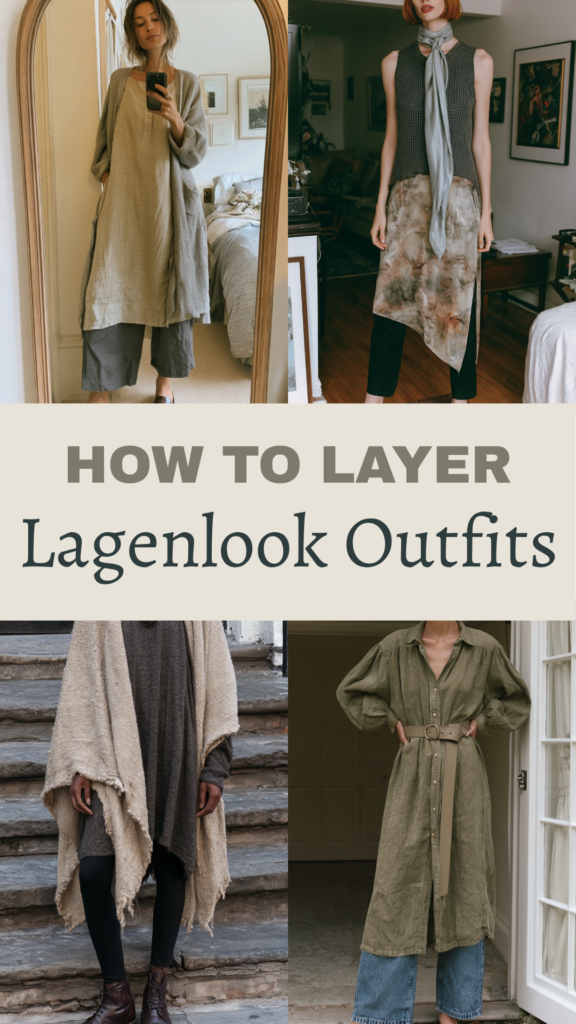
Where To Hunt Lagenlook Pieces Secondhand
The tell: the best lagenlook finds are almost never labeled that way, so your search terms have to work harder than the listing does.
- Check the fiber content first. A linen or linen-cotton blend on the tag is worth more than any brand name.
- Go by weight and drape before size, since lagenlook pieces run intentionally oversized, and a large from a boxy label can layer better than a true extra large from a fitted one. Online, that means reading measurements, not tag sizes.
- FLAX and Match Point USA show up constantly secondhand and are both built entirely around linen layering. Searching either name alongside “linen” turns up pieces with the right drape even when the listing photo undersells it.
- “Art to wear” is the sibling search term worth running alongside lagenlook itself, since sellers who don’t know the word lagenlook often reach for art to wear instead when they list an artsy oversized piece.
- Waterfall cardigans, ruana wraps, and vests stay cheap because they look shapeless on a hanger, and that gap is exactly where the deals are.
- Sizing runs generous by design, so a piece a size or two above your usual number often drapes better than a true fit. Don’t pass on something just because it looks big in the photo.
Four Lagenlook Outfit Formulas You Can Build Secondhand
Four formulas, all built on the same two rules. Start with the first and add the others as the right pieces turn up.
The Tunic and Wide-Leg Trouser Base
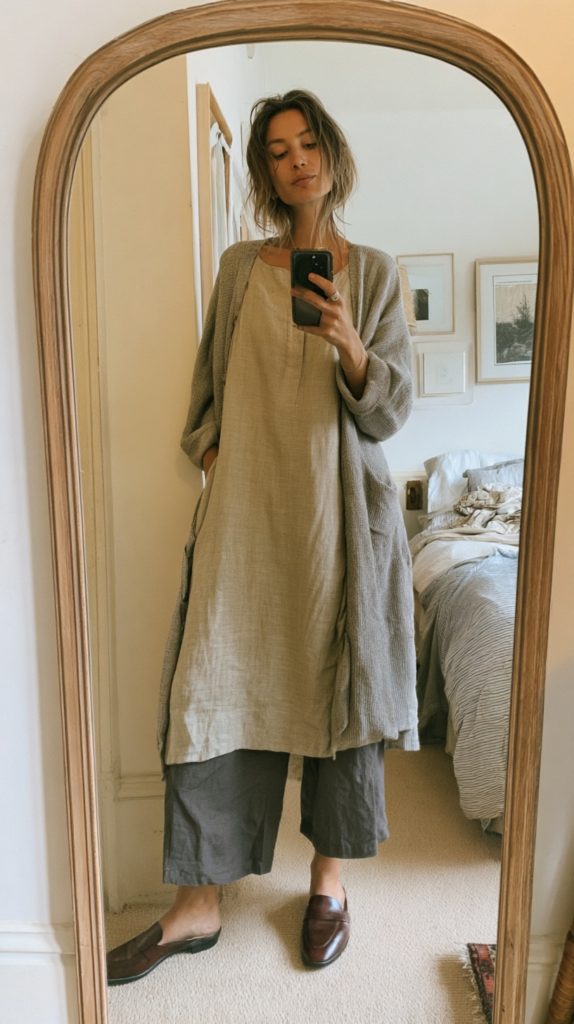
Start with a real linen tunic over cropped wide-leg trousers, then close the gap between them with a waterfall cardigan left open. Keep the palette tonal, oatmeal on stone or charcoal on black, and let the cardigan’s drape be the only movement in the outfit.
This is the formula to build first. Everything else in lagenlook is a variation on tunic-plus-trouser proportions.
One good tunic earns its keep across three seasons, worn alone in summer, layered with the cardigan in fall, and stacked over a turtleneck once it drops below freezing.
Shop the Look
From the Avant Heir Closet
One of One
Eileen Fisher 100% Organic Linen Dress
Sourced · Inspected · Shipped
The Midi Over Trousers Layer
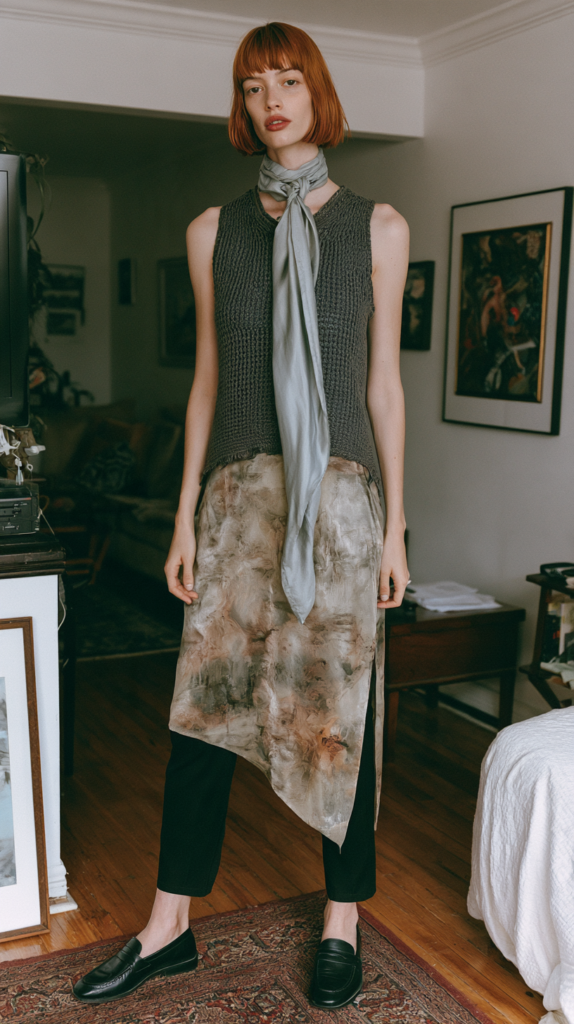
A midi skirt layered over slim pants sounds like a Pinterest trick until you try it, and then it becomes the easiest way to add movement without adding bulk. Reach for an asymmetrical hem midi skirt in a printed or textured fabric, top it with a sleeveless vest, and finish with a long silk scarf knotted loose.
This formula is where the eclectic color allowance lives, so let the scarf or the skirt carry a jewel tone the rest of the outfit stays quiet around.
It also happens to be the most forgiving formula for a first lagenlook attempt, since the trousers underneath do the anchoring and the skirt on top can be as loud or as quiet as you want.
Shop the Look
The Waterfall Cardigan Cold Weather Formula
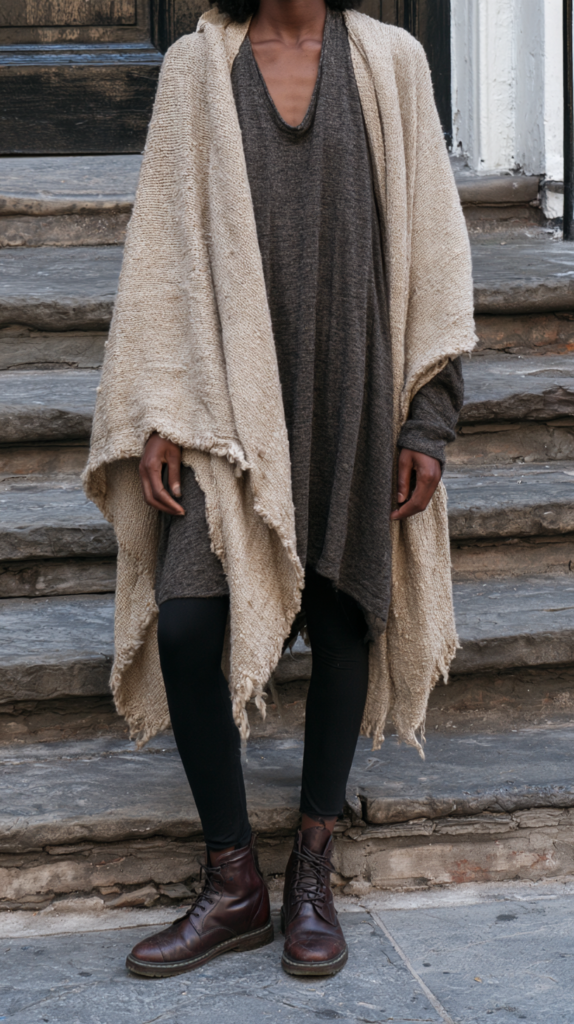
Cold weather lagenlook trades linen for ponte and jersey but keeps the same bones. A longline tee under a heavier layered tunic, opaque leggings underneath, and a ruana wrap or oversized poncho thrown over the whole thing for bulk that still moves.
Boots do the grounding work here, chunky and low, since the rest of the silhouette is already floating.
The tell: this is the formula where a real vintage ruana wrap earns its price. The weight and drape of an older wool wrap is hard to find in anything made now, so check the tag for wool and look for a listed weight or a photo of it draped, not folded.
Shop the Look
The Shirt Dress and Belt Formula
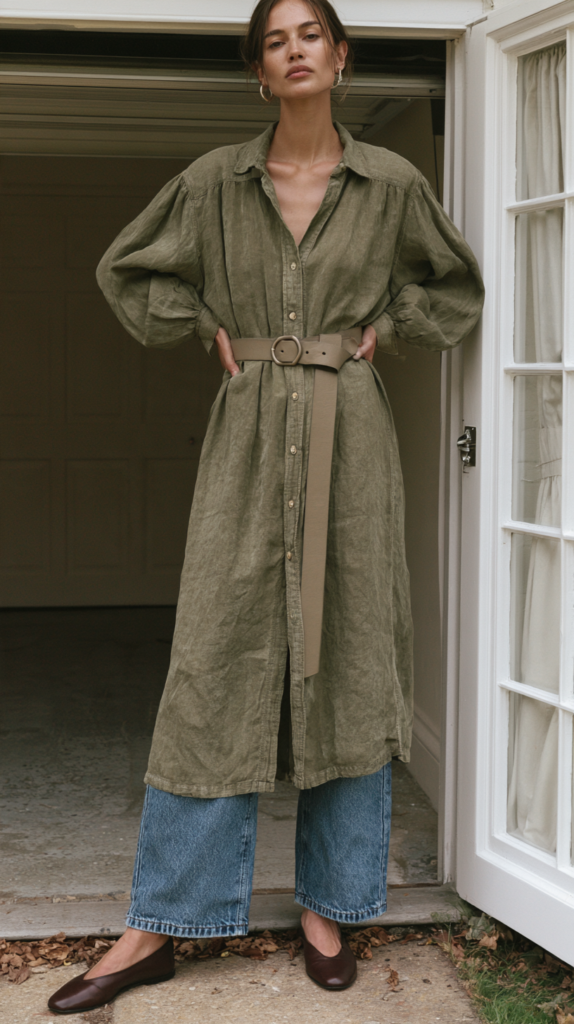
This is lagenlook for the days you need to look pulled together without losing the layered logic. A relaxed linen shirt dress over cropped wide-leg trousers, a low belt loose enough to let both pieces drape, and artistic flats instead of anything structured.
It looks considered without being costume-y, which makes it the easiest lagenlook formula to wear somewhere that isn’t a coffee run.
Keep the belt loose enough to move. The whole formula falls apart the second it starts pulling the drape tight.
Shop the Look
Keep Building The Layered Look
Lagenlook rewards patience more than almost any other aesthetic, since the best pieces are the ones everyone else scrolls past.
Start with the tunic and trouser base, get comfortable with the proportions, then let the other three formulas fill in as the right pieces turn up.
The lagenlook category keeps growing as new guides go up, so it’s worth a bookmark for the next hunt.