This post may contain affiliate links. If you make a purchase through these links, I may earn a commission at no additional cost to you. Learn more about our affiliate policy.
Most of us thrift by wandering. I did it for years.
We show up without a target, flip through about four hundred hangers (or four hundred listings on apps), end up with a shirt we won’t wear, and decide the good stuff is gone.
The good stuff is still out there. It’s sorted under a category you never checked, in a fabric you didn’t know to look for, in a section you assumed wasn’t for you.
Here’s the method that works for every aesthetic, in a store or from your couch, and the one anchor piece to hunt for each. (There’s a two second fabric test near the end that will change how you shop.)
Why Thrifted Outfits Beat New Ones for Aesthetic Dressing
Aesthetic dressing runs on fabrics and construction that cost real money to reproduce. Velvet with a proper nap, rayon that drapes, tweed with a canvas chest, cashmere that is not ten percent cashmere.
Fast fashion approximates all of it in polyester, which is why secondhand outfits so often look more convincing than new ones, for less money. The original versions of nearly every trending aesthetic were mass produced decades ago, and they’re still out there waiting.
The other advantage is that almost nobody else is looking. These pieces look like nothing on a hanger or in a quick listing photo, which is exactly why they’re still available.
The Method That Works for Every Aesthetic
Five steps, in this order. Skipping the first one is why most hunts come up empty.
- Pick one aesthetic before you start, not three. A single target turns four hundred options into a filter, and a filter is what makes a two hour hunt take forty minutes.
- Learn its three fabrics, because every aesthetic is defined by texture before color. Whimsigoth is velvet, rayon, and mesh. Academia is tweed, flannel, and corduroy. Learn three and you can spot a candidate by touch in a store, or by fabric search terms online.
- Learn its anchor piece, meaning the one garment that makes everything else in the closet read correctly. Anchor first, supporting pieces later.
- Shop the section nobody shops for it, which is almost never the one you’d expect. Most aesthetics live in menswear, long dresses, or sporting goods, and that’s true of online categories too.
- Build one complete outfit before starting a second, since two half-built looks are worth less than one that works.
The Anchor Piece for Every Aesthetic
Sixteen aesthetics, sixteen anchors. Find the anchor and the rest follows.
Moody and Romantic
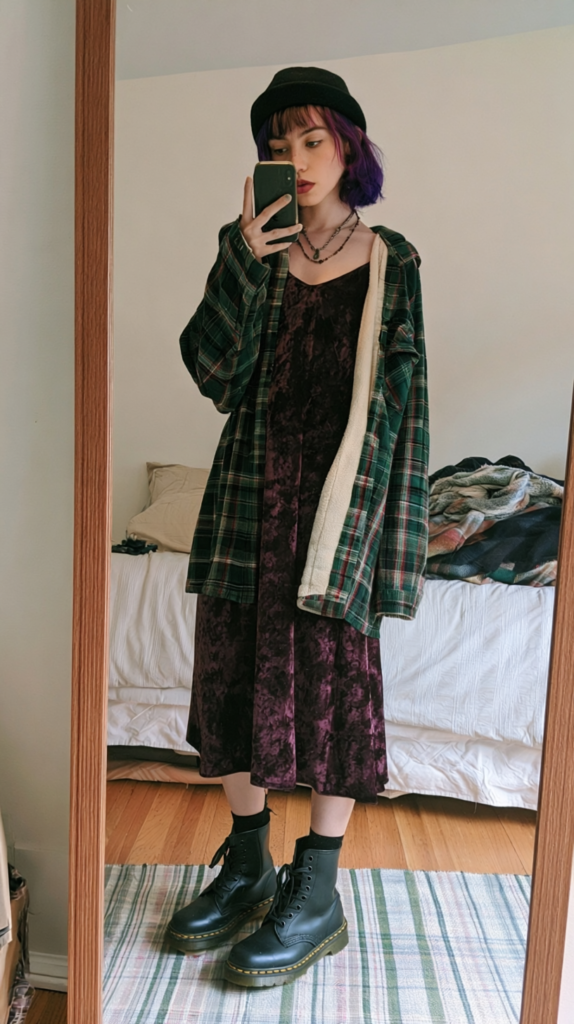
- Whimsigoth wants a panne velvet or celestial print rayon maxi. Look through long dresses by color, and go for fabric that swings and settles over fabric that holds a shape.
- Grunge wants an oversized plaid flannel with a collar that has gone truly soft. Men’s, two sizes up, never buttoned.
- Fairy wants a lace or crochet maxi that has gone matte where newer lace is shiny. A little damage is a feature here.
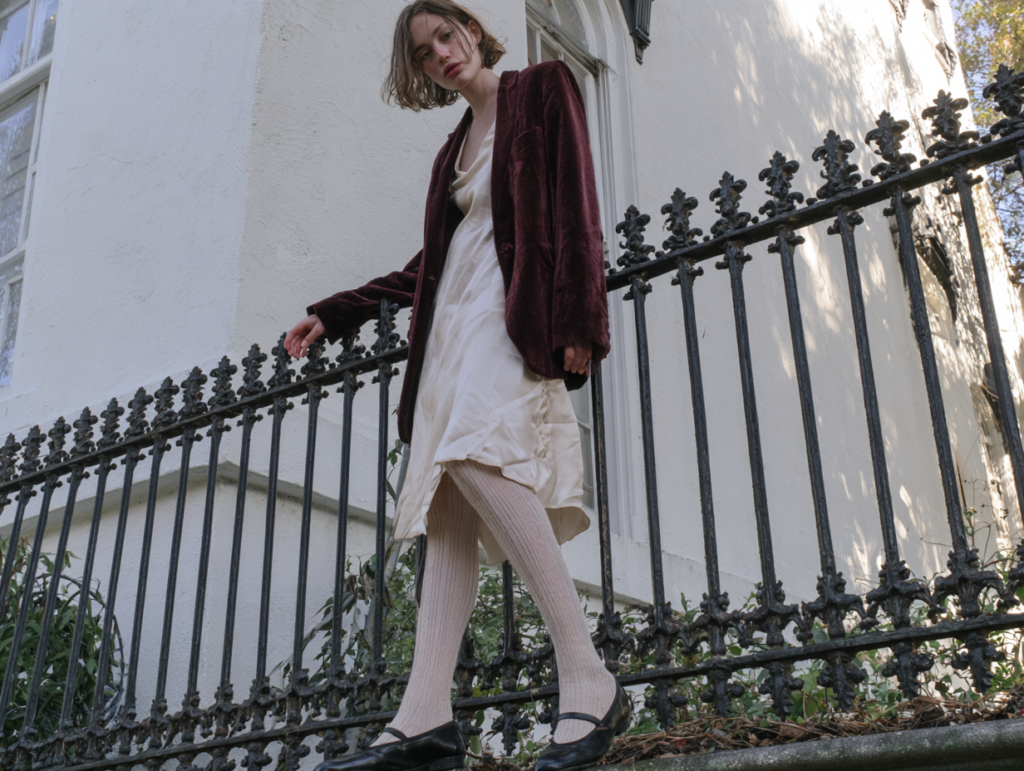
- Coquette wants a bias cut satin slip or a lace trimmed camisole. Check lingerie and sleepwear, which is where most of them get sorted.
Shop the Look
Structured and Classic
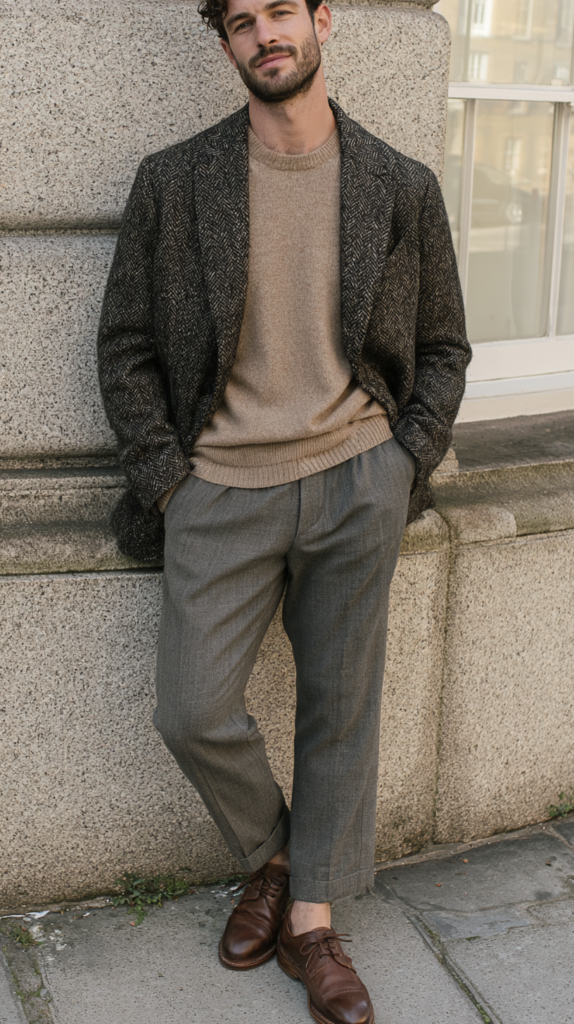
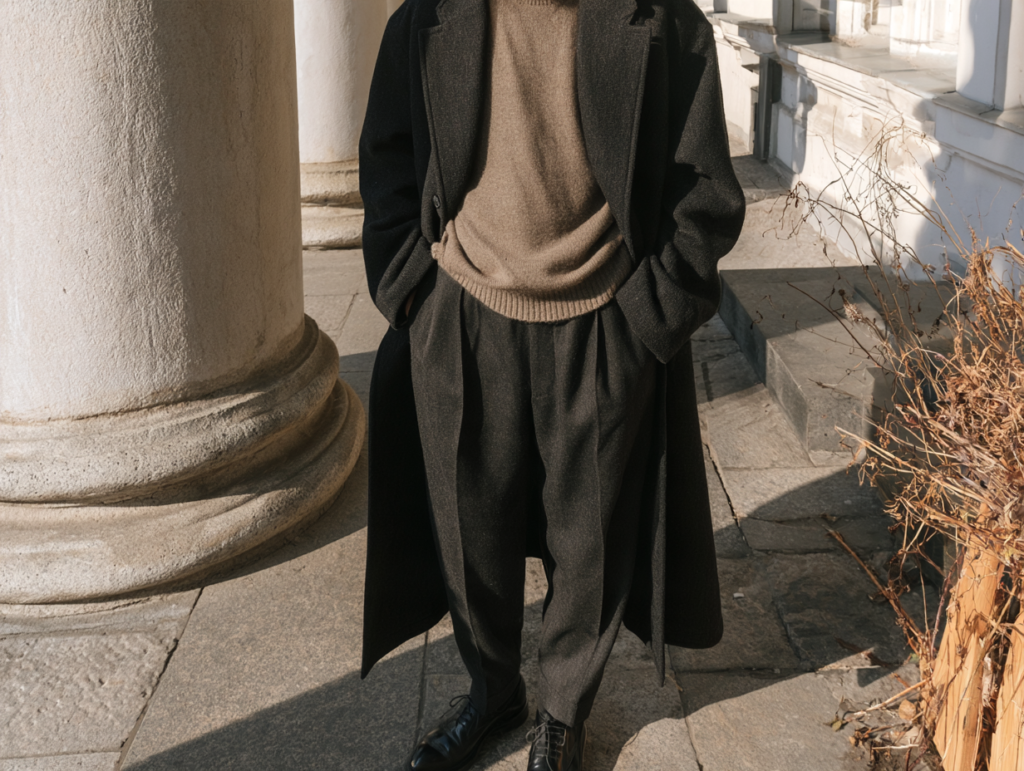
- Academia wants a tweed or herringbone blazer. In hand, pinch the chest panel, and if you feel a third layer floating between shell and lining, it’s canvassed and worth having. Online, go by the wool content on the tag.
- Old Money wants a cashmere crewneck in camel or navy. Read the percentage on the tag, since a ten percent blend behaves a lot more like acrylic.
- Grandpa wants an oversized wool cardigan with real shell or leather buttons. Check the elbows, which is usually why it was let go.
- Lagenlook wants a linen tunic with volume through the body. Linen softens with age and never gets better new.
Shop the Look
Earth and Outdoors
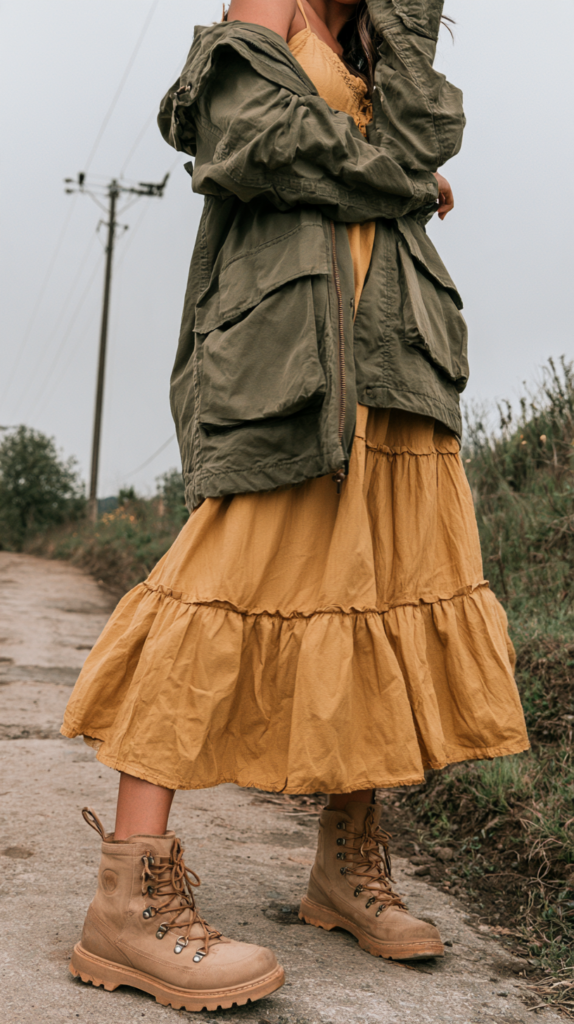
- Cottagecore wants a cotton prairie dress with a smocked bodice or a tiered skirt. Stick to cotton and cotton blends, since polyester loses the softness the look depends on.
- Boho wants an embroidered or suede maxi with real weight to it. Weight is the quality test, so look for it listed in the description if you can’t pick it up.
- Gorpcore wants a Gore-Tex shell with taped seams visible on the inside. Look in sporting goods and men’s outerwear before women’s coats.
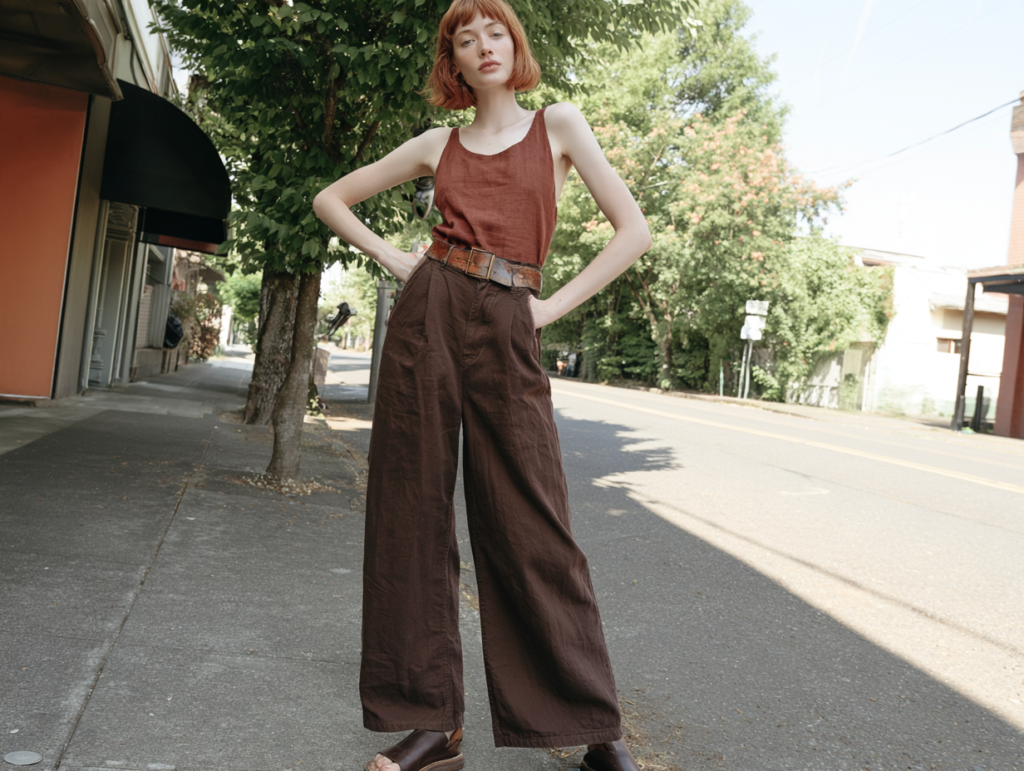
- Goblincore wants wide wale corduroy in mushroom brown or moss. The heavier rib looks vintage from across a room.
Shop the Look
Era and Attitude
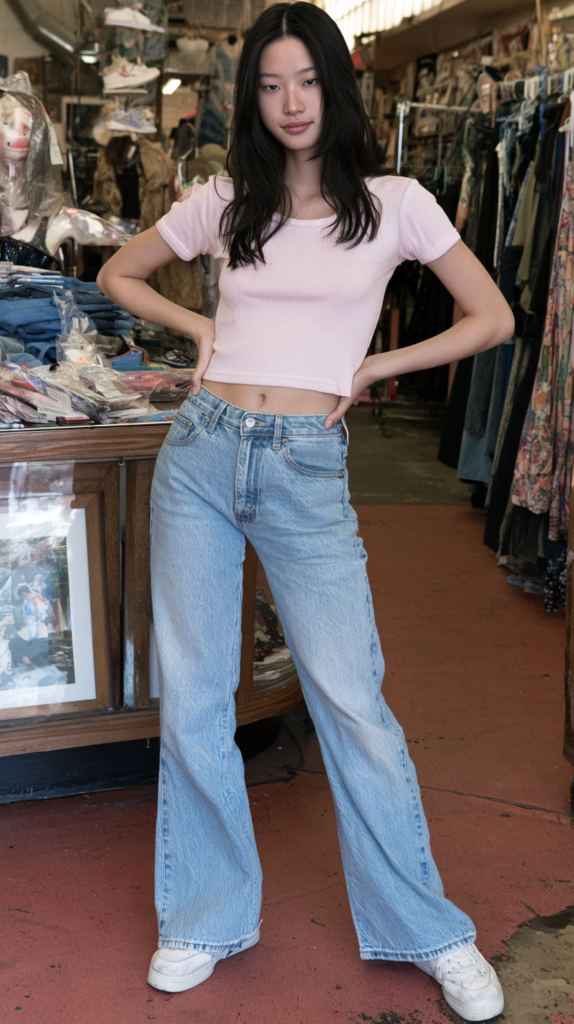
- Y2K wants a baby tee or a mesh top with the right shine. Check juniors and tees, and lean into slightly cheap synthetics here. They’re correct for the era.
- 70s and Hippie wants a wide leg trouser or a suede fringe piece. Real seventies polyester has a distinctive heavy hand that modern polyester does not.
- Western wants a pearl snap shirt with real snaps and a yoke. Men’s shirts, and the more faded the better.
- Vintage wants whatever carries a union label, a single stitch hem, or a Talon zipper. Those three tells are the whole category.
Shop the Look
What This Looks Like on a Real Trip
Forty minutes, one aesthetic, one anchor. It works the same way whether you’re in an aisle or in a search bar.
In a store, walk past the front displays, since those hold whatever came in yesterday, priced accordingly. Online, skip the promoted listings for the same reason. Go straight to the section or search that holds your target.
On the first pass, go by fabric. In a store that means touching everything, because a good piece announces itself before you ever see a label. Online it means putting the fabric in the search (“rayon,” “wool,” “panne velvet”) and scanning photos for drape and texture.
Pull everything that passes the fabric test, or save it to a watchlist, then check tags and condition all at once at the end. Batching that step is what turns a two hour hunt into a forty minute one.
The tell: condition is the last filter, and it sorts into two piles.
- Cheap fixes. Loose hems, missing buttons, fallen linings, and a stuck zipper.
- Put it back. Moth holes in wool, underarm rot, delaminated shell interiors, and thinning at the shoulders, no matter how right it looked. Online, ask the seller about all four if the listing doesn’t say.
The Four Fabric Tests That Work Everywhere
These take about two seconds each in hand, and each one has a photo or tag equivalent when you’re shopping from a screen.
- The drape test. Hold the skirt or the body of the garment out and let it drop. Rayon, silk, and good wool swing and then settle. Polyester holds a shape and springs. In photos, look at how it hangs on the hanger.
- The thumb press. Push your thumb into a knit or a pile fabric. Real cashmere, wool, and deep pile fleece recover, while acrylic and thin fleece tend to stay flat. Online, the fiber tag answers this one.
- The light test. Hold the fabric toward a window. You’re looking for a faint woven grid, which means ripstop, or for stitch gaps in a knit, which means it will pill and lose shape. Close-up photos show both.
- The nap test. Run your hand against velvet or corduroy. If the pile stays flattened where you pushed it, that’s panne, and it will look completely different in low light than plush velvet does. In photos, panne has an uneven, liquid shine.
Where to Shop by Aesthetic
The section that holds your aesthetic is rarely the one labeled for you.
- Men’s small and medium covers grunge, academia, old money knits, gorpcore, western, and workwear. That’s six of sixteen from one place.
- Long dresses cover whimsigoth, cottagecore, fairy, boho, and most nineties florals.
- Sporting goods and outerwear cover gorpcore and heritage jackets, since technical gear gets sorted every which way.
- Lingerie and sleepwear covers coquette and slip dresses, which get sorted by function and not by how anyone wears them.
Late summer through early fall is when the most wool, velvet, and outerwear shows up, so it’s a good time to hunt for most of this list.
The Short Version
Thrifted outfits work because the fabrics that define aesthetic dressing were mass produced decades ago and are expensive to fake now.
Pick one aesthetic, learn its three fabrics, hunt its anchor piece, and shop the section nobody associates with it. Four fabric tests will carry you through everything else.
Start with whichever anchor above is cheapest where you shop, usually the flannel, the cardigan, or the mesh top. One right anchor piece changes how everything already in your closet looks, and that beats a full outfit assembled by wandering.