This post may contain affiliate links. If you make a purchase through these links, I may earn a commission at no additional cost to you. Learn more about our affiliate policy.
Old money menswear usually gets explained as a shopping list of brands, which is the fastest way to make it look bought. The look is really fabric and upkeep, and secondhand is where both are cheap.
No blazer in this post. Tailoring is the part everyone already covers, and it isn’t what guys reach for on a regular fall Tuesday anyway. Knitwear, trousers, outerwear and shoes carry the season.
Seven outfits, each with the one check that tells you whether the piece is worth your money. (The shoe tell in outfit six is my favorite. It turns a $30 pair into a ten year pair.)
Navy Shetland crewneck, grey flannel trousers, brown suede loafers
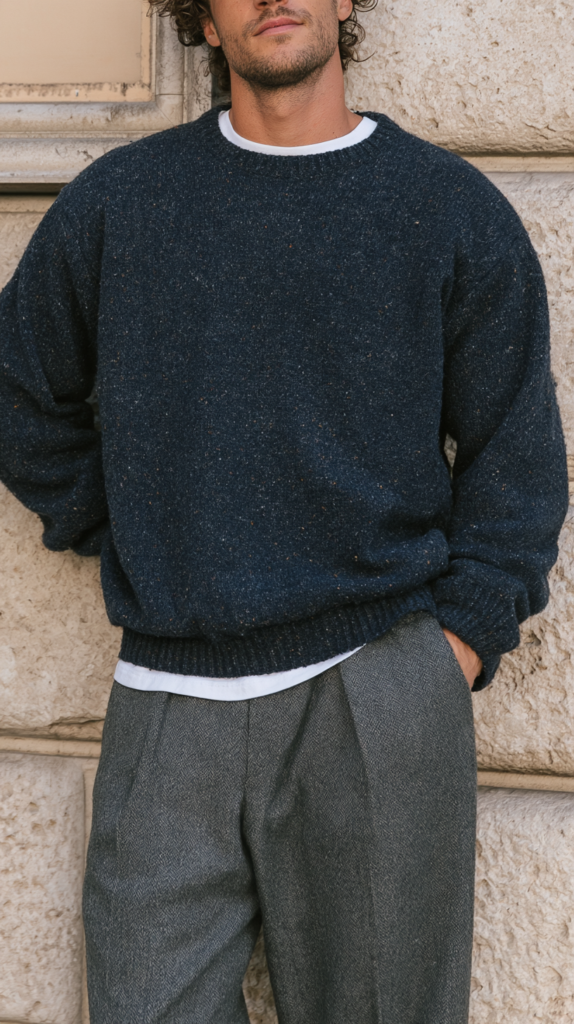
A navy Shetland wool crewneck over a plain white tee, grey wool flannel trousers, brown suede loafers.
Shetland is the fall knit this aesthetic really runs on, and it costs a fraction of what cashmere does secondhand because almost nobody recognizes it on a tag. I love it for that.
The tell: Shetland has a dry, slightly hairy feel and a visible heathered fleck, little bits of contrasting color spun into the yarn. It shows up clearly in a close-up photo. Lambswool is smoother and flatter by comparison.
- Check the elbows first. That’s where men wear a sweater through, and it isn’t worth repairing at this price. Ask for an elbow photo if there isn’t one.
- What to pay. Expect $15 to $25.
Light blue oxford cloth shirt, olive chinos, white leather sneakers
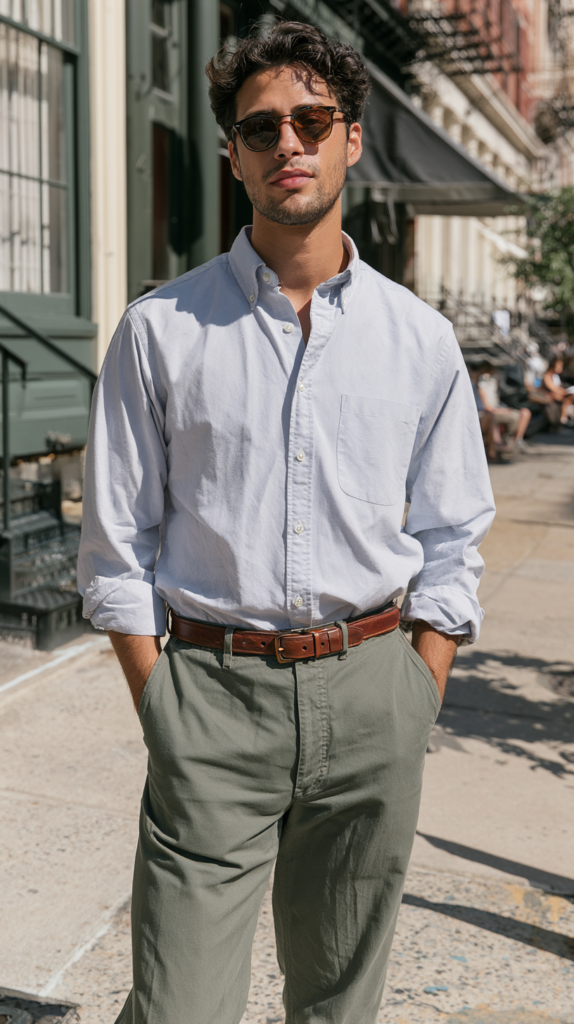
A light blue oxford cloth button-down, olive cotton chinos, a brown leather belt, white leather sneakers.
The most repeatable outfit in the aesthetic, and the one that keeps it from feeling like a costume. Oxford cloth softens with every wash, so a secondhand one arrives already broken in.
The tell: look at the collar from the side. A good oxford has an unlined or lightly lined collar that rolls in a soft arc away from the shirt, and you can see it in photos of the shirt buttoned on a hanger. A fused collar lies flat and a little stiff, and it won’t ever roll, no matter how many washes it gets. Buy the blue one before the white one, since white oxfords yellow at the collar and blue hides everything.
Oatmeal shawl collar cardigan, white tee, dark indigo jeans, moccasins
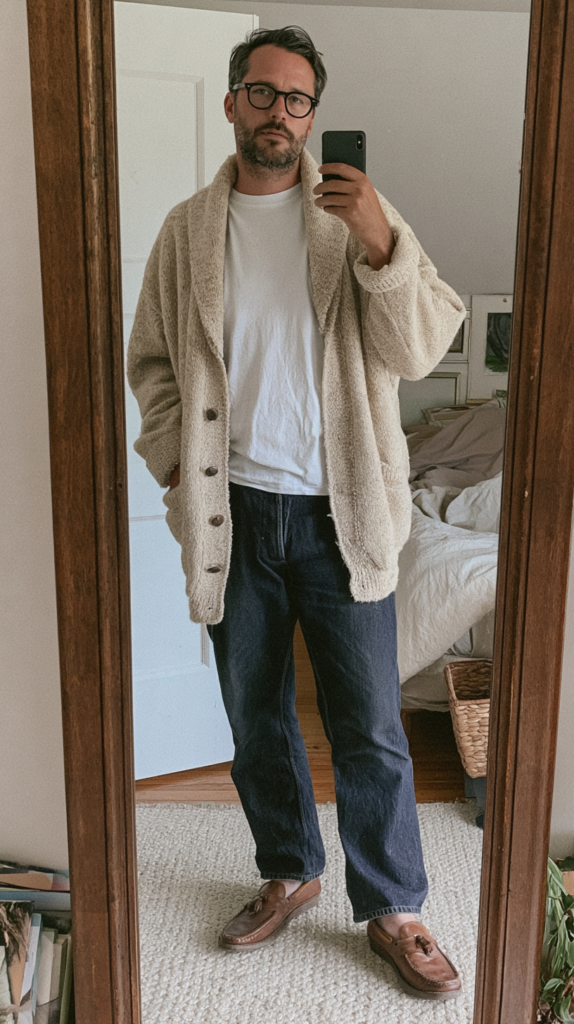
An oatmeal shawl collar cardigan over a plain white cotton tee, dark indigo straight leg jeans, brown leather moccasins.
The shawl collar is the piece that makes the whole thing look inherited, and there are always plenty of them around, because on a hanger it looks like somebody’s grandfather. (On a body, it looks like somebody’s very well dressed grandfather. That’s the goal.)
The tell: two spots fail first on a heavy cardigan.
- The pocket corners. Hands distort the knit there before anywhere else, and a pocket that has gone slack and bell shaped won’t block back into place. A flat lay photo shows it.
- The collar seam. Check where the collar meets the body for pulling or gaps.
- What to pay. Usually $18 to $30.
Olive waxed cotton field jacket, cream fisherman knit, brown corduroy trousers
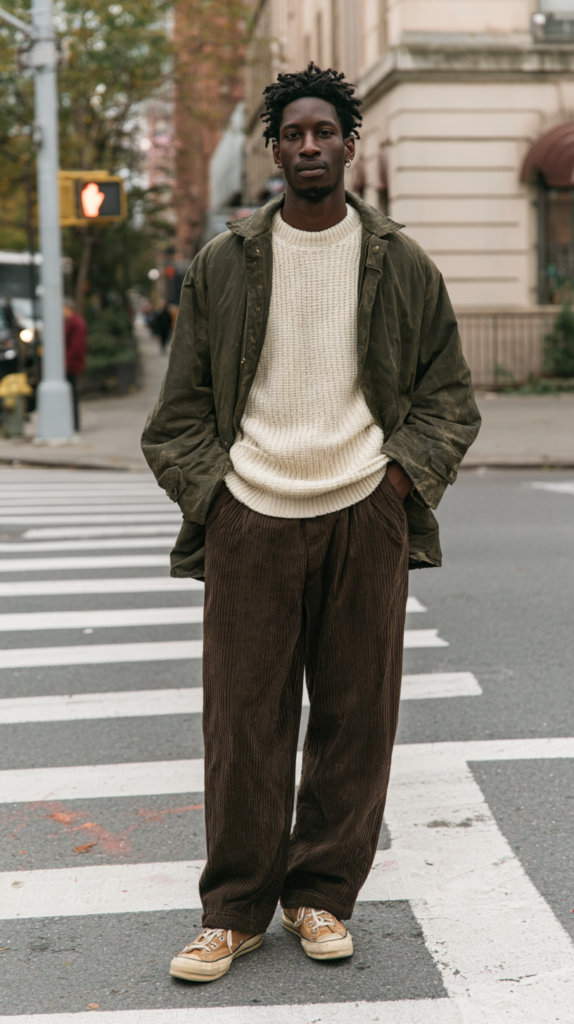
An olive waxed cotton field jacket over a cream fisherman knit, brown corduroy trousers, tan canvas sneakers.
Waxed cotton is the one fall outerwear fabric that gets better with wear. The creases and dulled patches are exactly what people pay extra for on the new version.
The tell: ignore how dull it looks and check two things.
- Fixable. Dry, cracked wax at the elbows and hem is normal. Waxed cotton can be re-waxed at home for about fifteen dollars, and it comes back better than it started.
- Not fixable. A tear through the cotton itself, or a lining that has shredded at the shoulders. Ask for photos of both.
- What to pay. A jacket nobody wants because it looks tired runs $30 to $50, against several hundred new.
Charcoal wool overcoat, navy merino turtleneck, black leather oxfords
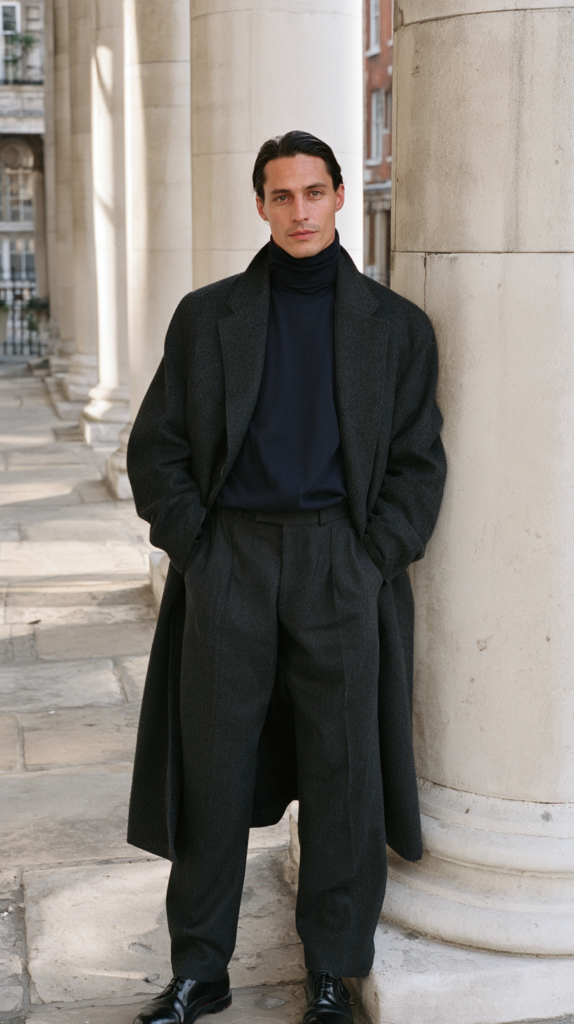
A charcoal wool overcoat over a navy merino turtleneck, charcoal wool trousers, black leather oxfords.
Charcoal over camel, because everyone else hunting this aesthetic is looking for the camel one, and the grey coats just sit there.
The tell: moth damage, and this is the most expensive mistake you can make in secondhand wool. In hand, hold the back panel up against a window. Pinholes that are invisible flat are obvious backlit. Online, ask the seller directly about moth holes and look for a return policy.
- A few holes near a seam can be rewoven.
- A scatter across the shoulders or upper back means more are coming. Pass.
- What to pay. Good grey coats sit around $40, partly because almost nobody does this check.
Burgundy lambswool crewneck, stone cotton trousers, brown penny loafers
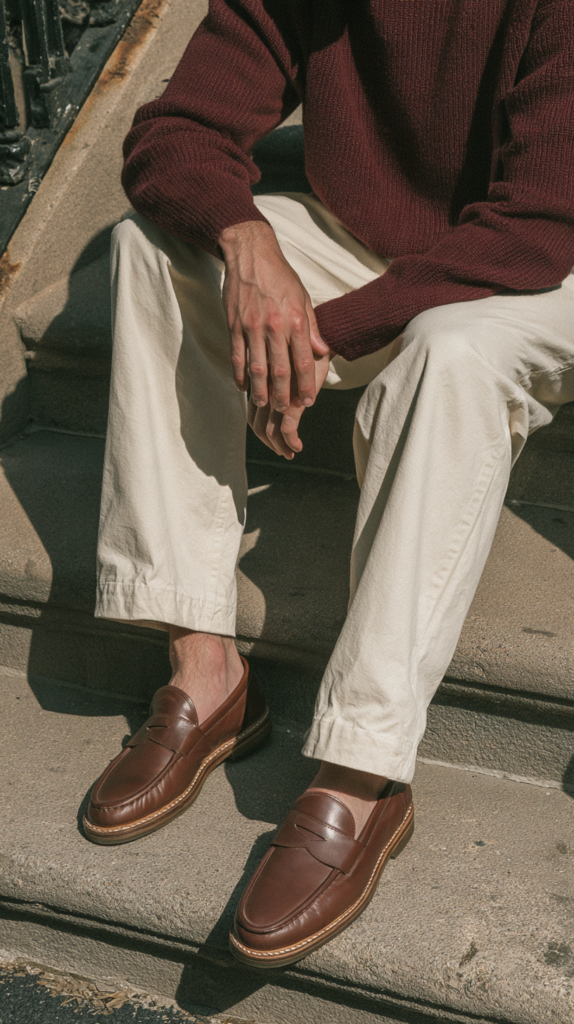
A burgundy lambswool crewneck, stone cotton trousers, brown leather penny loafers.
Burgundy is what this aesthetic wears where other people would wear red, and it does more for a fall outfit than any neutral.
The tell: turn the loafers over, or find the sole photo, and look at the edge where the sole meets the upper.
- Stitching around the perimeter means a welted shoe, and a welted shoe can be resoled for around sixty dollars, over and over. At $30 secondhand, that’s a ten year shoe.
- No stitching means the sole is glued on. It can still be a fine shoe for a season or two. It just shouldn’t cost the same.
- Check the inside too. A leather lining outlasts a fabric one by years.
Ecru waffle henley, chocolate Corduroy trousers, tan suede loafers
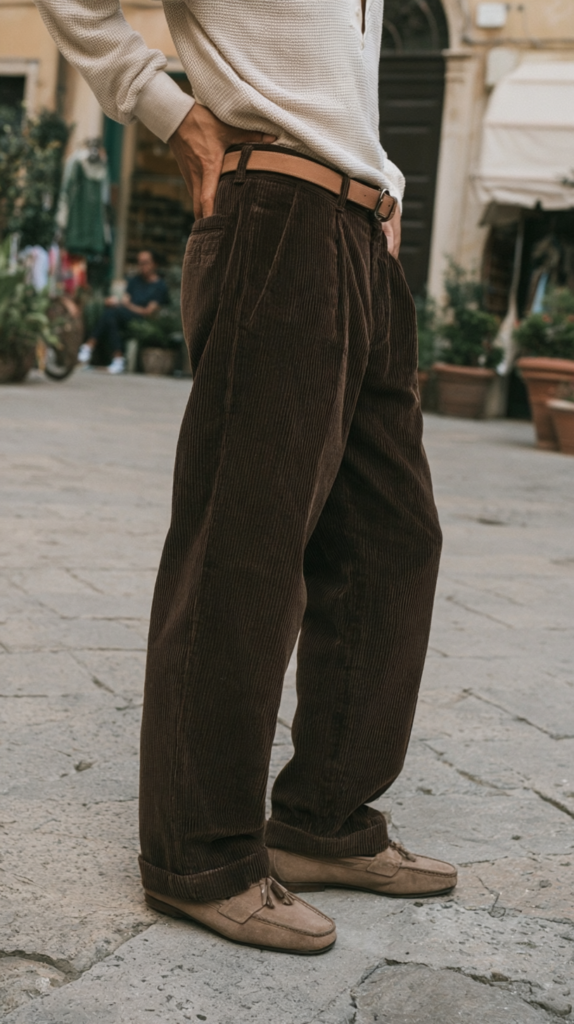
An ecru waffle knit henley, chocolate brown corduroy trousers, a tan leather belt, tan suede loafers.
Corduroy is the fall trouser with the most range in the aesthetic. It’s cotton woven with raised ribs called wales, and the wale count decides how dressy it reads. Fine and mid wale corduroy, around 11 to 14 ribs per inch, sits right next to a henley or a tweed jacket, while wide wale leans more country weekend. It’s also everywhere secondhand, so you can be picky and hold out for all cotton over stretch blends.
The tell: check the inner thighs, knees, and seat in good light, or zoom in on those spots in photos. Corduroy wears bald where it rubs, and once the ribs flatten into smooth patches they don’t come back. Run your thumb against the grain too. A good pile feels dense and springs back, and a thin one feels papery. A pair can look fine hanging on the rack and still be worn through at the thighs, so this check is easy to miss.
Where to start
Seven outfits running on six fabrics:
- Shetland
- Oxford cloth
- Waxed cotton
- Wool flannel
- Corduroy
- Lambswool
Get to know those six, by hand and by tag, and everything stops looking like a wall of the same thing. Start with the Shetland crewneck. It’s the cheapest piece on this list, the easiest to find, and it anchors four of the seven outfits on its own.
More in the Old Money guides.