This post may contain affiliate links. If you make a purchase through these links, I may earn a commission at no additional cost to you. Learn more about our affiliate policy.
Most 90s thrifting advice points at one dress and stops. The dress is worth finding, but a dress isn’t a wardrobe, and it isn’t what makes 90s whimsigoth outfits work in daylight on a Tuesday.
The separates are what nobody hunts. Bias cut satin, burnout velvet, sheer mesh, real leather, shrunken knits. All of it turns up constantly, all of it costs almost nothing, and most of it is hiding somewhere you’ve scrolled or walked right past.
Six pieces, the tell for each, and three ways to put them together. (One of these is the most expensive-looking thing you can buy for four dollars. I stand by that.)
The bias cut satin skirt
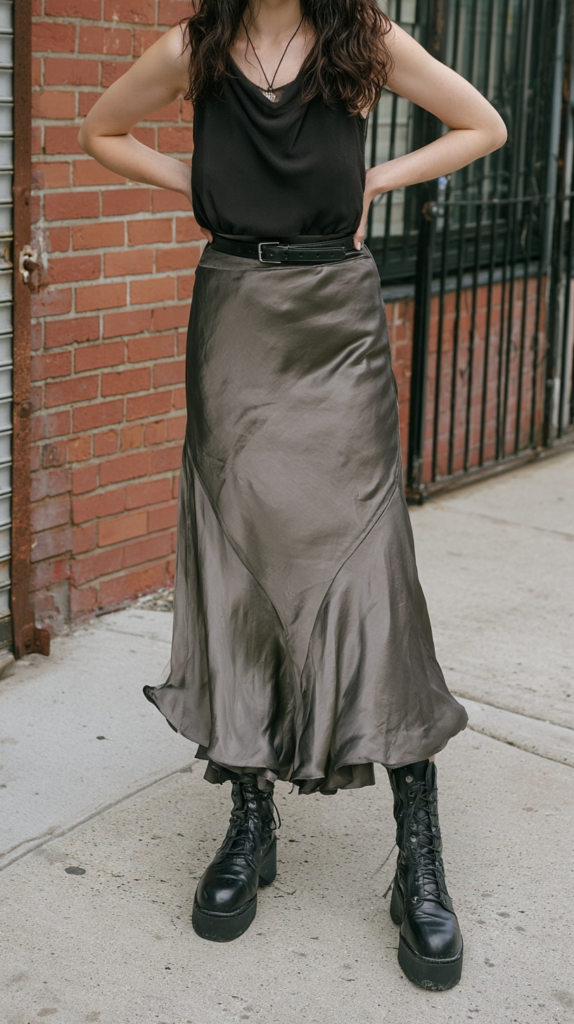
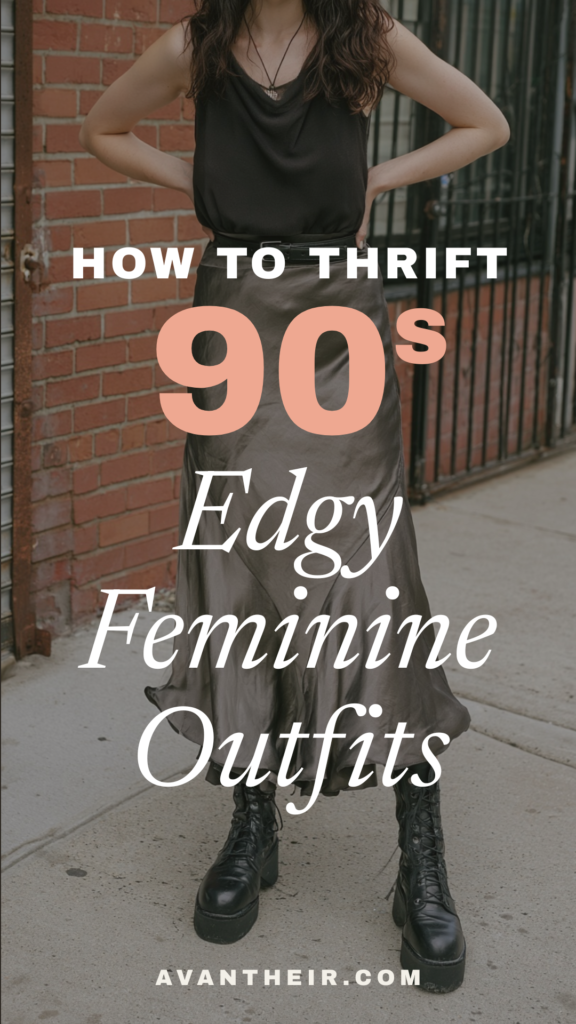
The single most useful 90s separate, and the one people misidentify most. A bias cut skirt hangs in a soft column and moves with weight, which is what gives edgy feminine outfits their looseness without looking sloppy.
A straight grain skirt cut to look similar hangs flat and swings like a curtain. Once you’ve seen the difference, you can’t unsee it.
The tell: look at the side seam.
- True bias. The seam spirals slightly around the body, and the hem ripples a little. Both are correct, and both show in a hanging photo.
- Straight grain. A perfectly level hem on a satin skirt usually gives it away.
- Check the seat before you commit. Bias fabric stretches there first, and a sagging seat can’t be taken back in.
- What to pay. Expect $12 to $22 secondhand.
Burnout velvet, and the light that proves it
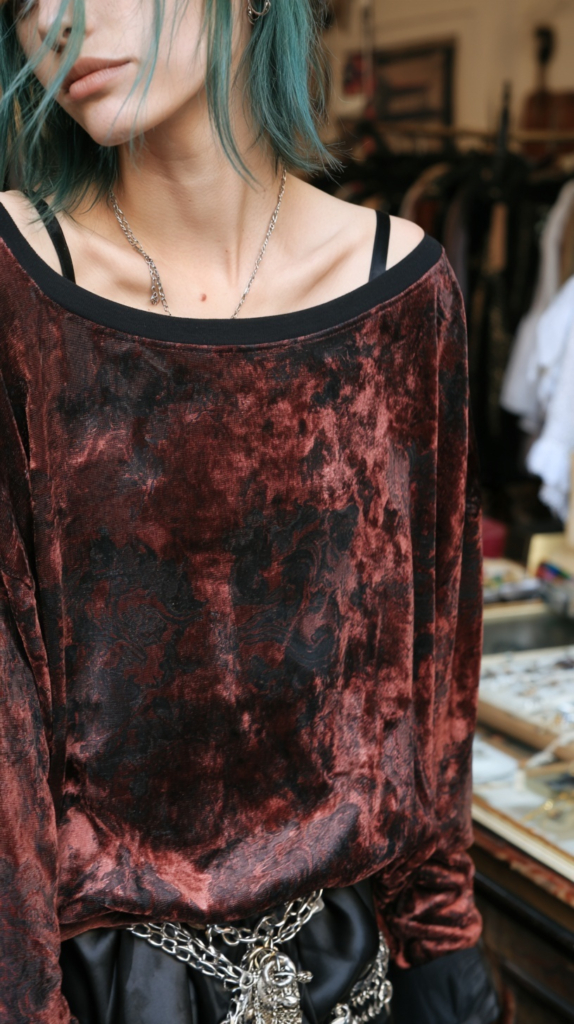
Burnout velvet, or devoré, is velvet where the pile has been chemically etched away in a pattern, leaving sheer fabric behind. It was everywhere between 1994 and 1999 on tops, scarves and shawls, and it’s the most expensive-looking thing you can buy for four dollars.
The tell: hold it up against a window, or look for a listing photo shot against light. Real devoré goes truly transparent where the pile was removed, so the pattern becomes light and shadow. A printed imitation shows a pattern but blocks light evenly across the whole panel. This is a different fabric from panne velvet, and worth learning separately. While you’re looking, check for splits in the sheer areas, because the etched ground is thin, and that’s where devoré fails.
Sheer mesh as a base layer, not a dress
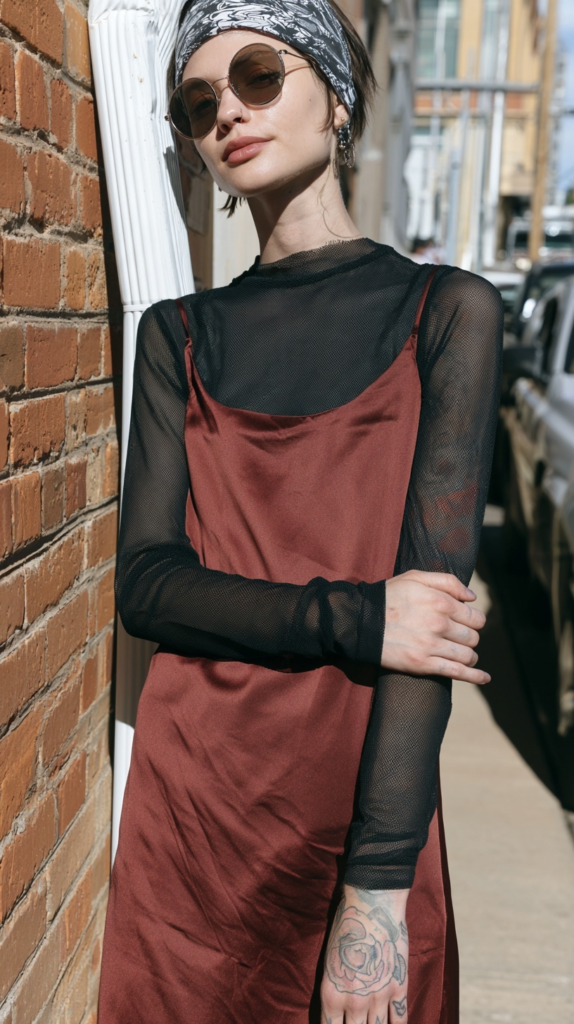
A plain black stretch mesh long sleeve under a slip, a tank or a short sleeve dress is the fastest way to take an outfit from pretty into vamp style outfits territory. It does more as a base layer than it ever did as an overlay dress.
The tell: 90s mesh has a slightly matte, dry finish, and the seams are overlocked, with a visible loop of thread along the inside edge. Current mesh runs shinier and is often bonded or laser cut with no seam allowance at all. Snags are period correct and should lower the price, not stop the purchase. These run $8 to $15, which makes mesh the cheapest way into the whole wardrobe.
Leather that is actually leather
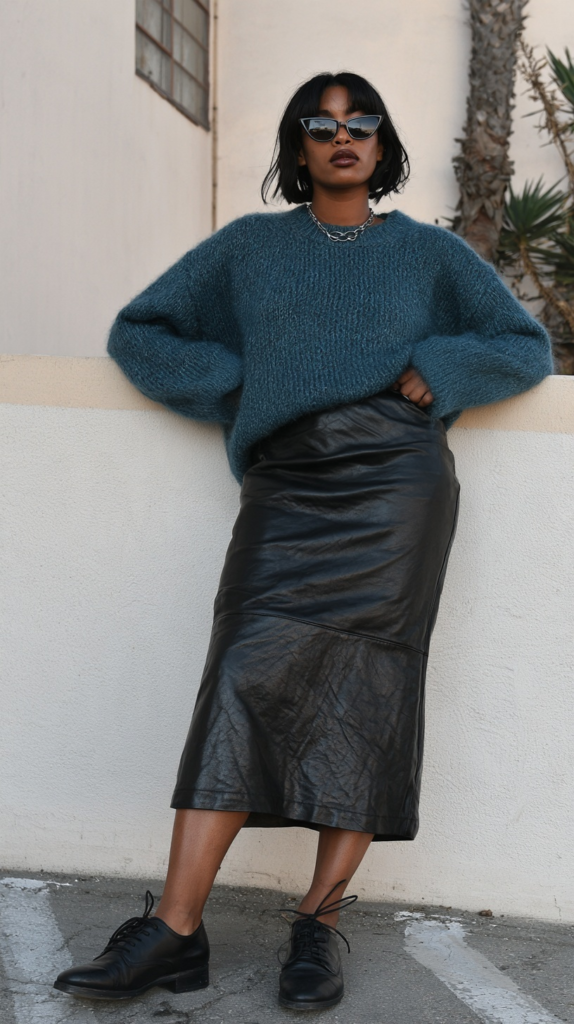
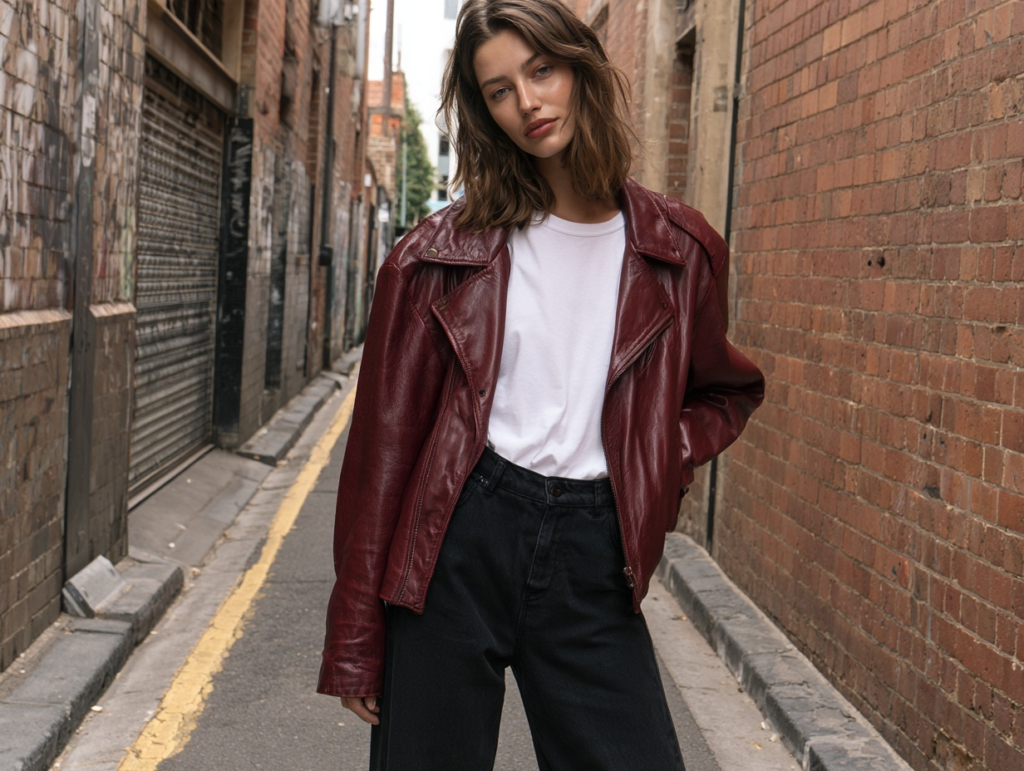
A leather midi skirt or a cropped moto in oxblood or black is the piece that keeps the whole wardrobe from going soft. The 90s made an enormous amount of both, and they’re still circulating, because leather doesn’t wear out on the same timeline as everything else.
The tell: find a cut edge, at the hem or inside a slit, or ask for a close-up of one.
- Real leather shows a solid cross section in the same tone all the way through, and the surface grain is irregular.
- Bonded leather shows a fabric backing, like thin grey felt, and it’s usually already peeling at the stress points. A printed grain repeats.
- Check the lining at the seat and underarms. A torn lining is a cheap fix. Cracked leather isn’t.
- What to pay. A skirt runs $25 to $45, and a jacket more.
The shrunken cardigan
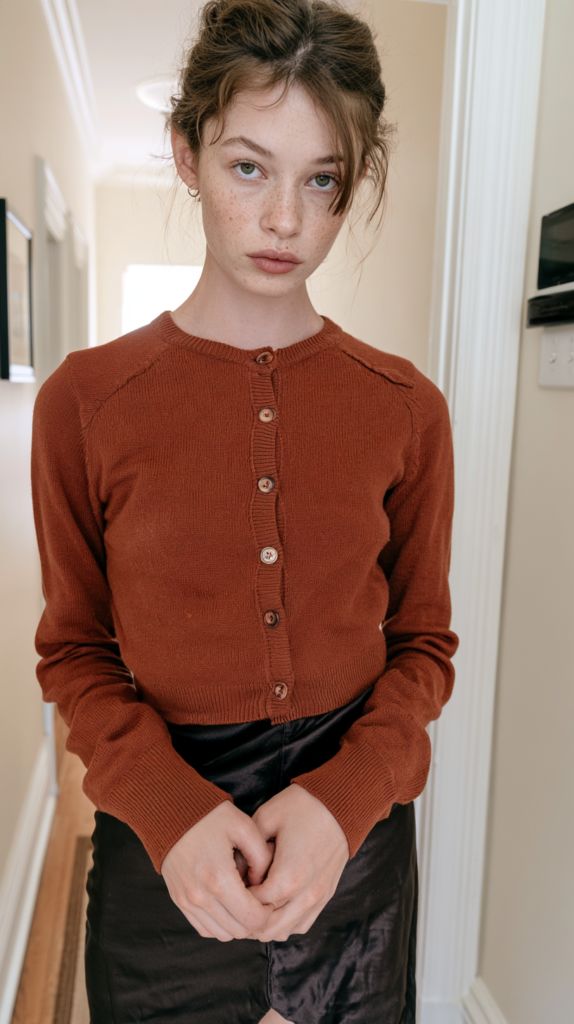
A small, fitted cardigan buttoned over a slip is the layering move that says 90s faster than anything else on this list, because the proportion is the opposite of what the last fifteen years taught us.
The tell: the shoulder seam should sit at or above your real shoulder point, so compare the shoulder measurement to a top that fits you. Then check the button band, which is where these fail. A band that has stretched into a wave won’t lie flat again, and steaming doesn’t fix it. Look in juniors and kids’ sizes too, since that’s where these really live, and almost nobody else is looking there. Rarely more than $10.
The rack it is all hiding on
Formalwear. It’s the section nobody wants, in stores and online, because everything in it looks like a prom dress or a mother-of-the-bride jacket.
That’s where 90s burnout velvet tops, beaded mesh shells, satin bias skirts and velvet separates sit untouched at a few dollars each. Ignore what the garment was for and go by the fabric. The other overlooked spot is scarves and accessories, which is where most surviving devoré ends up.
One more thing that trips people up: 90s womenswear came before vanity sizing, so a 90s size 10 is roughly a modern 6. Look two sizes up from your number, and go by measurements when you can. This kind of section-by-section logic is the same approach that works across every aesthetic worth thrifting.
Three ways to put it together
Start with one of these before you try to build everything at once.
The daylight version. A charcoal bias cut satin midi skirt, a black mesh long sleeve tucked in, a thin black leather belt and black leather loafers. Quiet enough for anywhere, and all 90s underneath.
The evening version. An oxblood burnout velvet top over a black slip skirt with tarnished silver rings and black leather mules. The devoré does all the work here, so everything else stays plain.
The cold version. A black leather midi skirt, a deep plum shrunken cardigan buttoned to the top, opaque black tights and black Mary Janes. Hard against soft, which is the entire formula, and the one that carries the wardrobe through winter without losing its edge.
What to buy first
Buy the bias skirt first. It anchors all three formulas, and it’s the piece you’ll keep longest.
Then the mesh long sleeve, because it’s the cheapest thing on this list and it quietly changes everything you already own. Leather last, since it’s the one piece worth waiting to find in good condition.
If you want to go deeper on dating a piece to the decade rather than identifying the fabric, that lives in the 1994 guide.
More in the Thrifted Outfits guides.